Bio Acetate for Custom Optical Frames & Sunglasses
Bio acetate can be considered for eyewear collections looking for an alternative acetate material direction while maintaining the color, pattern and machining flexibility associated with sheet-based frame construction.
The exact biobased, recycled or certified content varies by material supplier and grade, so sourcing claims should be confirmed from the specific material documentation before production.

What Does “Bio Acetate” Mean in Eyewear?
The term can describe acetate-based eyewear materials with a biobased, recycled or alternative material profile, but the exact composition depends on the supplier and grade.
Cellulose-Based Foundation
Cellulose acetate is based on cellulose, a renewable natural resource used in acetate material systems.
Grade-Specific Composition
Bio-based and recycled content should not be assumed. Exact percentages depend on the selected material grade.
Sheet-Based Processing
Many acetate-based eyewear grades can be processed through sheet cutting, CNC machining and polishing routes.
Brand Positioning
Material choice can support a more considered sourcing story, but environmental claims should match verified documentation.
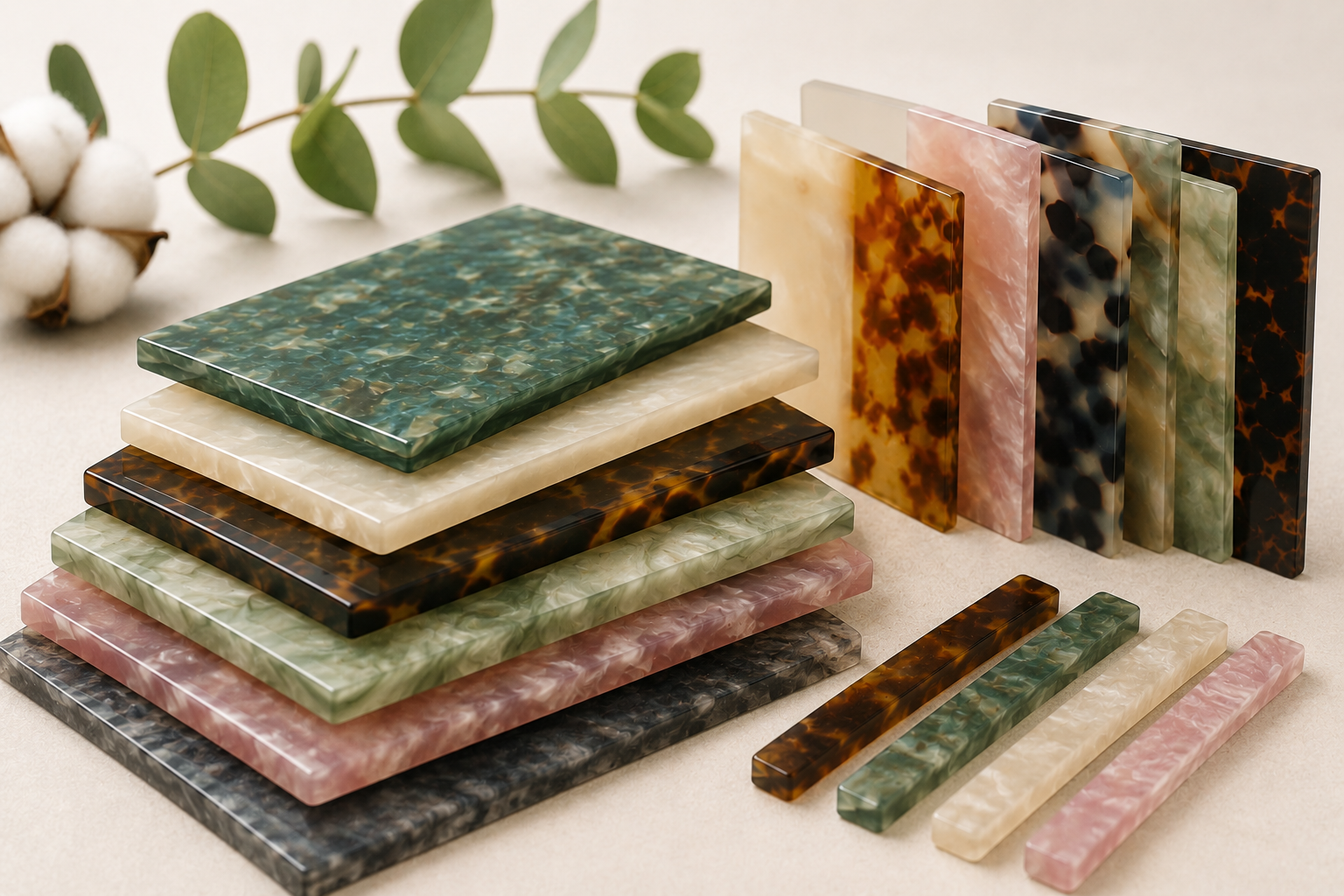
Color, Pattern and Sheet Selection
Bio acetate sheet selection should consider more than the environmental story. Color consistency, pattern, thickness, machining behavior and actual material availability all influence the finished eyewear.
Before sample development, the exact supplier, grade and sheet reference should be confirmed wherever the project requires specific material claims.
- Transparent and translucent colors
- Tortoiseshell and marbled patterns
- Multiple sheet thicknesses
- Pattern direction for frame cutting
- Color and batch consistency
- Supplier and grade confirmation
From Material Direction to Finished Frame Sample
Material choice and frame design should be developed together. Sheet pattern, frame geometry, thickness, lens shape and polishing all affect how the selected bio acetate appears in the final product.
Sampling allows the frame structure, appearance and production feasibility to be evaluated before bulk production.
- Frame front geometry
- Temple profile development
- Pattern orientation
- Lens shape and groove requirements
- Surface polishing
- Sample review before production

What Should Be Confirmed Before Production?
“Bio acetate” should be treated as a specific sourcing and material specification rather than only a marketing label.
For OEM and ODM projects, the supplier, material grade, available colors and relevant supporting documents should be reviewed before production.
- Material supplier and grade
- Sheet thickness and dimensions
- Color and pattern availability
- Biobased-content documentation where applicable
- Recycled-content documentation where applicable
- Manufacturing compatibility
Material Evaluation Profile
Bio Acetate vs Conventional Acetate
The practical difference depends on the exact material grade, so sourcing documents should be reviewed before making composition or environmental claims.
| Area | Bio / Renew Acetate | Conventional Acetate |
|---|---|---|
| Material Positioning | Acetate-based material with grade-specific biobased and/or recycled-content positioning. | Conventional cellulose acetate material system. |
| Composition Claims | Should be checked against supplier and material documentation. | Composition should follow supplier specification. |
| Design Options | Can support varied colors, profiles and patterns depending on grade. | Wide range of traditional acetate colors and patterns. |
| Manufacturing Route | Often compatible with sheet-based acetate production routes, subject to grade. | Sheet cutting, machining, polishing and assembly. |
| Brand Story | Can support alternative material positioning where documentation supports the claims. | Typically focused on design, craftsmanship and material appearance. |
From Bio Acetate Sheet to Finished Eyewear
Material selection and manufacturing need to be considered together. The exact production route should be confirmed according to the selected material grade and frame design.
Material Confirmation
Confirm supplier, grade, color, thickness, availability and supporting documentation.
Frame Development
Review frame geometry, sheet use, pattern direction and machining feasibility.
Sampling
Produce sample frames to evaluate appearance, machining and finishing.
Production & QC
Confirm the approved sample, production requirements and final inspection standards.
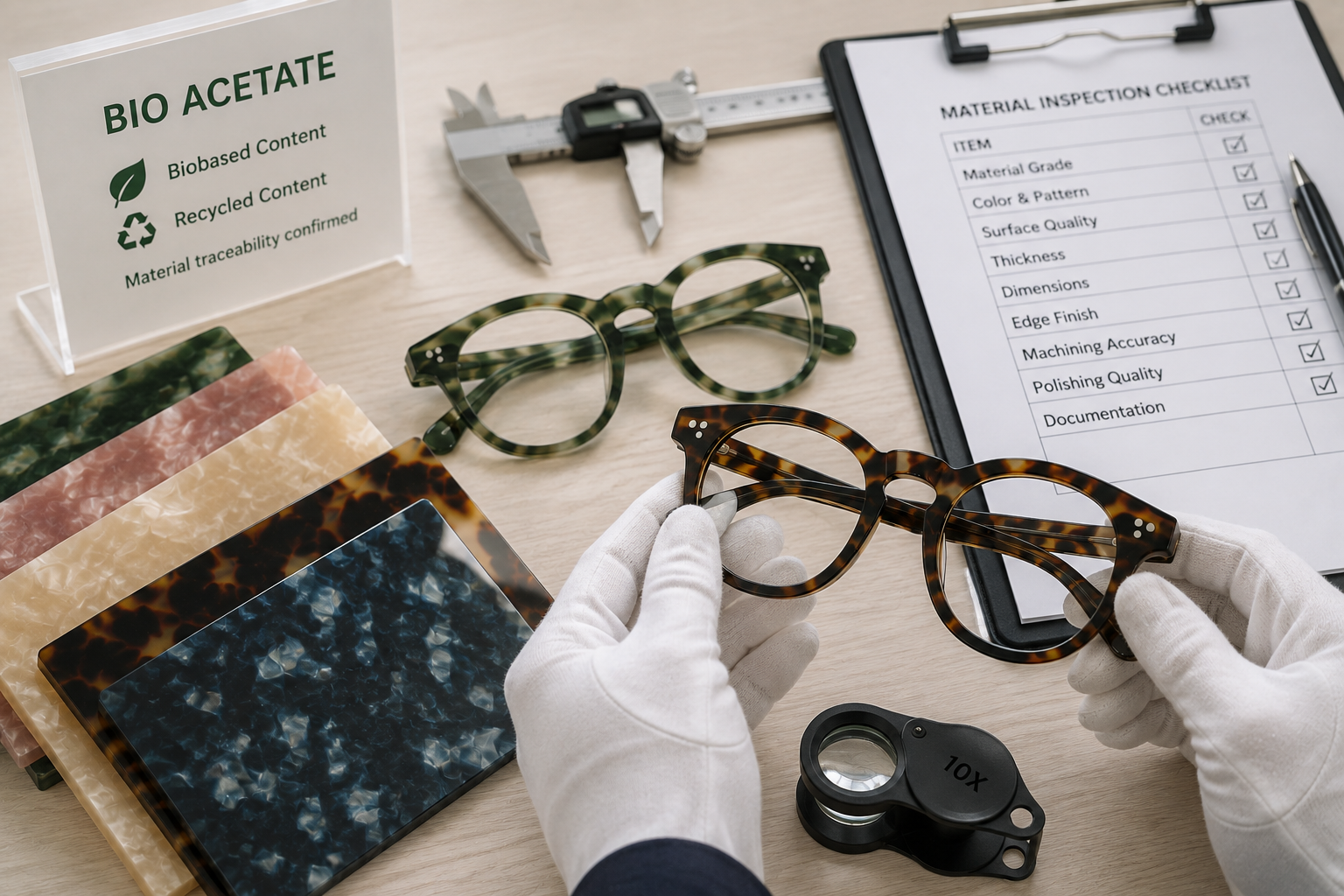
Material Claims and Frame Quality Should Both Be Checked
A material story does not replace manufacturing quality. The selected sheet material, finished frame dimensions, machining accuracy, polishing and final appearance should all be reviewed.
Where a project depends on specific biobased or recycled-content claims, the related supplier documentation should be retained with the project specification.
- Material grade verification
- Color and pattern inspection
- Sheet thickness check
- Frame dimensions
- Machining and edge quality
- Surface polishing inspection
- Supporting material documentation
What Should an Eyewear Brand Confirm Before Ordering?
Bio acetate should be evaluated as a specific material grade, not only as a marketing term.
Supplier & Grade
Confirm the exact material supplier, product name and grade proposed for your project.
Biobased Content
Ask whether any biobased-content percentage is documented for the selected grade.
Recycled Content
If recycled-content claims are required, verify the percentage and supporting documentation.
Material Documentation
Confirm whether supplier declarations or other relevant material documents are available for the selected grade.
Color & Sheet Availability
Check the actual sheet color, pattern, thickness and available quantity before sample development.
Manufacturing Compatibility
Review whether the selected material grade is suitable for the intended frame and production route.
Develop a Bio Acetate Eyewear Collection Around Your Brand
Projects can begin from an existing frame, drawing, reference sample or design direction. Material selection can then be evaluated together with frame structure, color, branding and production feasibility.
- Optical frame collection development
- Sunglass frame development
- Material and color review
- Frame logo customization
- Sample development
- Private label packaging requirements
Send Us Your Project Brief
Include your frame design, reference image, material preference, target quantity, color direction and any material documentation requirements important to your brand.
Discuss Your ProjectBio Acetate Eyewear FAQ
Is all bio acetate the same?
No. Material composition, biobased content, recycled content, certifications and processing properties can vary between suppliers and grades.
Can bio acetate be used for optical frames and sunglasses?
Suitable acetate-based grades can be evaluated for optical frames and sunglasses, subject to the selected material specification and manufacturing requirements.
Is bio acetate biodegradable?
Biodegradability should not be assumed from the term “bio acetate” alone. Any biodegradability or compostability claim should be supported by the specific material documentation.
Can we request a specific bio acetate supplier?
Specific supplier or grade requests can be reviewed according to availability, minimum order requirements and manufacturing feasibility.
Can bio acetate be CNC machined and polished?
Many sheet-based acetate eyewear materials can use machining and finishing processes, but the exact production route should be confirmed for the selected grade.
What should we provide before sample development?
Send your frame drawing or reference, preferred material supplier or grade where known, desired colors, target quantity, logo requirements and any documentation requirements.
Considering Bio Acetate for Your Next Eyewear Collection?
Send us your frame design, reference sample, preferred material direction, target quantity and sourcing requirements. We can review the material and manufacturing route before sample development.
Discuss Bio Acetate Eyewear