Hand Polishing for Premium Acetate Eyewear Frames
Deepward combines machine-assisted polishing with skilled hand finishing to refine acetate optical frames, sunglasses, temples, edges, and detailed frame surfaces. Careful polishing helps improve smoothness, visual depth, edge quality, and the premium tactile feel expected from custom eyewear.
Start Your Project Acetate Manufacturing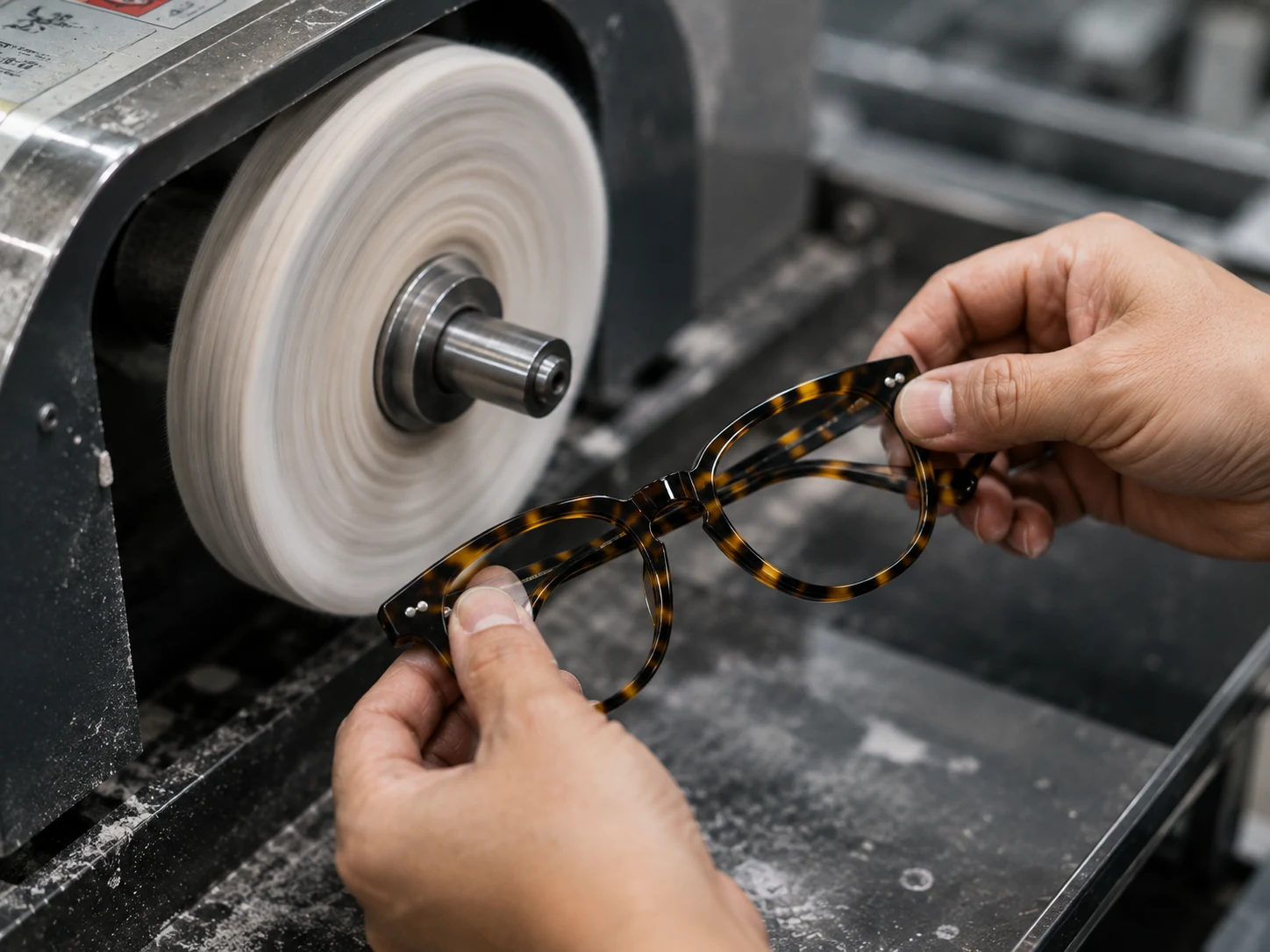
Why Hand Polishing Matters in Acetate Eyewear Manufacturing
CNC machining creates the frame geometry, but finishing determines how the eyewear looks and feels in the hand. Hand polishing helps refine areas that require visual judgment, controlled pressure, and detailed finishing.
Smoother Frame Surfaces
Controlled polishing helps remove machining marks and refine the surface before final assembly and inspection.
Refined Edges
Frame fronts, temples, corners, and bridge areas can be carefully rounded and finished for a smoother appearance and feel.
Better Material Depth
Proper polishing helps reveal the color, transparency, pattern, and visual depth of acetate materials.
Premium Final Appearance
Detailed hand finishing helps improve consistency in high-end optical frames and sunglasses.
Where Hand Polishing Is Used on Eyewear Frames
Different areas of an acetate frame require different levels of finishing. Experienced operators adjust pressure, angle, and polishing methods depending on the component and desired final appearance.
- Frame front outer edges
- Lens opening edges
- Bridge and nose areas
- Temple surfaces and edges
- Hinge transition areas
- Decorative frame details
- Acetate surface refinement
- Final appearance correction
Acetate Eyewear Polishing Process
The exact polishing sequence varies according to frame shape, acetate material, surface condition, and required finish.
Machined Frame Review
CNC-machined frame fronts and temples are checked for surface condition, edges, and areas requiring refinement.
Initial Edge Refinement
Rough edges and visible machining marks are reduced before finer polishing stages begin.
Surface Smoothing
Frame surfaces are progressively polished to improve smoothness and prepare the acetate for final finishing.
Bridge & Detail Polishing
Bridge areas, corners, hinge zones, and other detailed features receive additional attention.
Temple Polishing
Temple surfaces and edges are refined to achieve a consistent finish along the full component.
Final Buffing
Controlled buffing helps develop the desired gloss, smoothness, and material appearance.
Cleaning
Polishing residue and dust are removed so the frame can be visually inspected.
Appearance Inspection
Surface consistency, edges, scratches, symmetry, and visual finish are checked before assembly.
Different Finishing Effects for Acetate Eyewear
Polishing requirements can be adjusted depending on your frame design, acetate selection, and brand positioning.
High-Gloss Finish
A polished surface designed to enhance acetate color, transparency, and pattern depth.
Soft Gloss
A more restrained polished appearance for understated premium eyewear collections.
Matte Finish
Selected frame styles can be developed with a lower-gloss appearance according to production requirements.
Rounded Edges
Frame edges can be refined to create smoother transitions and softer visual lines.
Bold Frame Finishing
Thick acetate designs require careful surface and edge finishing to maintain a premium look.
Detailed Hand Finishing
Complex corners, bridge areas, hinge transitions, and decorative zones can receive additional manual refinement.
Eyewear Products That Benefit from Hand Polishing
Hand finishing is particularly valuable for acetate eyewear where appearance, touch, and material detail influence product positioning.
Acetate Optical Frames
Refined finishing for prescription-ready frames sold by premium optical and independent eyewear brands.
Acetate Sunglasses
Hand-finished frame surfaces for fashion, designer, and premium sunglass collections.
Designer Eyewear
Detailed polishing for custom frame shapes, bold acetate patterns, and distinctive brand designs.
Luxury Eyewear
Greater attention to surface quality, detail refinement, edge consistency, and tactile feel.
Quality Checks After Hand Polishing
Polishing is evaluated as part of the complete frame quality process, not only by surface gloss.
| Inspection Area | Key Checks |
|---|---|
| Surface Smoothness | Visible machining marks, scratches, polishing marks, rough areas, and overall surface consistency. |
| Frame Edges | Edge smoothness, corner refinement, sharp points, and consistency around the frame. |
| Bridge Area | Surface refinement, symmetry, nose area finishing, and visible defects. |
| Temple Finish | Surface consistency, edge quality, hinge transition, and end-tip appearance. |
| Material Appearance | Acetate color, transparency, pattern clarity, and visual depth. |
| Final Visual Check | Overall frame appearance, symmetry, cleanliness, and readiness for assembly. |
Hand Finishing Integrated into Complete Acetate Eyewear Manufacturing
Hand polishing works best when it is integrated with material selection, CNC machining, core wire processing, hinge installation, assembly, branding, and final inspection.
- Custom acetate frame manufacturing
- CNC-machined frame fronts and temples
- Skilled hand polishing and edge refinement
- Core wire and hinge processing support
- Custom logos and private label packaging
- Final quality inspection before shipment
Need a Premium Finish for Your Acetate Collection?
Send us your drawings, samples, acetate materials, finish references, frame specifications, target quantity, and brand positioning. Our team can review the design and recommend a suitable manufacturing and finishing approach.
Hand Polishing FAQ
Why is hand polishing used for acetate eyewear?
Hand polishing allows detailed areas, edges, bridges, temples, and surface imperfections to be refined with greater visual control than machine processing alone.
Does hand polishing affect acetate color and pattern?
Yes. Proper finishing can improve surface clarity and help reveal the visual depth, transparency, and pattern of acetate materials.
Can different gloss levels be produced?
Yes. Final appearance can vary depending on the design, acetate material, polishing sequence, and required surface finish.
Is polishing done before or after assembly?
Several polishing and finishing stages can occur during production. Major frame surface finishing typically takes place before final assembly, followed by additional cleaning, adjustment, and appearance checks.
Can you polish custom acetate frames from our own design?
Yes. Deepward can support custom acetate eyewear projects from CNC machining and hand finishing through assembly, branding, packaging, and final inspection.
Start Your Custom Acetate Eyewear Project
Send us your frame drawings, reference samples, acetate preferences, finish requirements, target quantity, logo details, and packaging needs. Deepward can help develop a complete manufacturing and finishing solution for your eyewear collection.
Request a Quote