Carbon Fiber for Lightweight & Technical Custom Eyewear
Carbon fiber can be considered for eyewear collections requiring a lightweight direction, a distinctive technical appearance and a material story that differs from acetate or conventional metal frames.
Frame construction, material form, layer structure, finishing and component integration should be reviewed during project development.
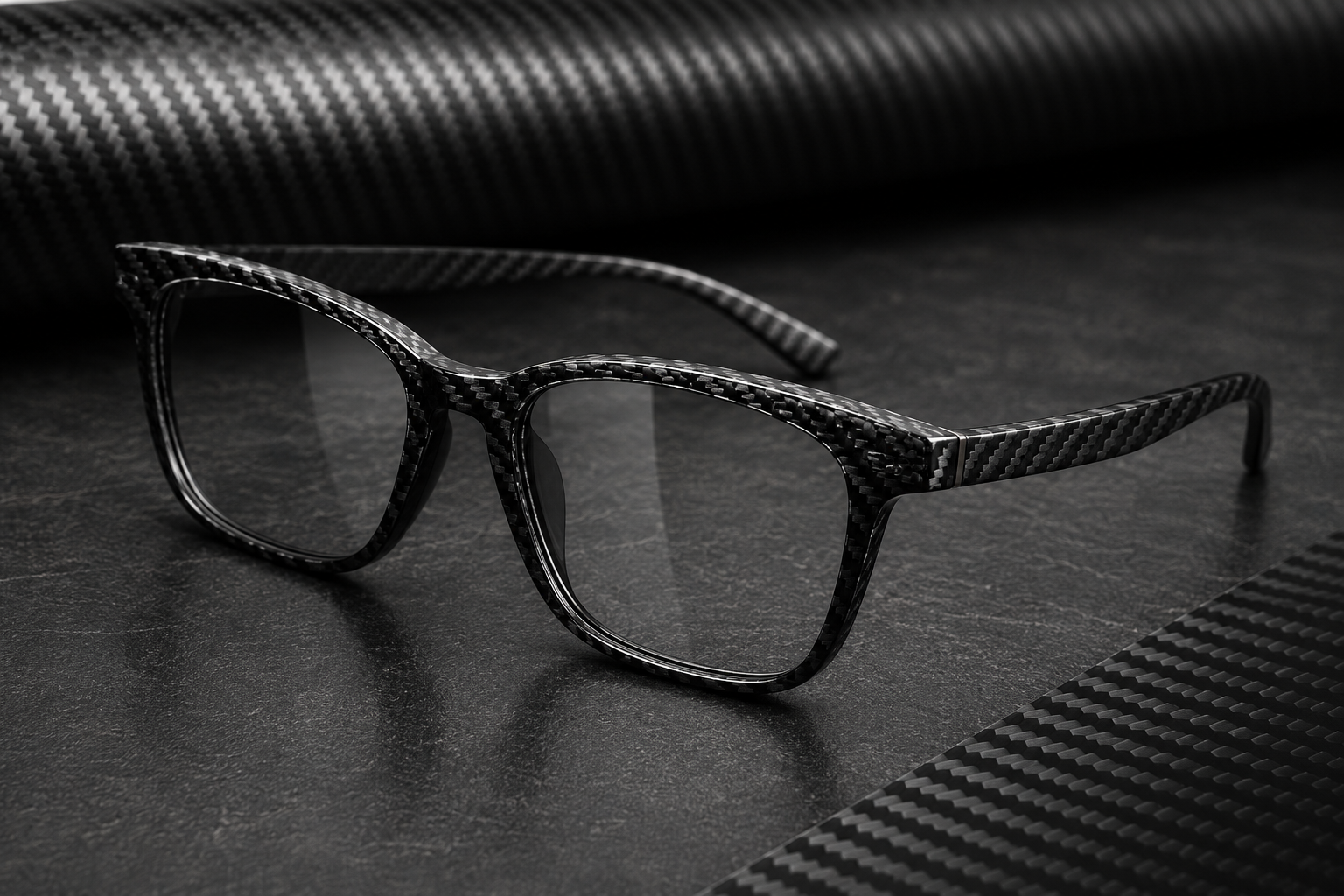
Why Consider Carbon Fiber for Eyewear?
Carbon fiber offers a distinctive technical material direction that can support selected lightweight and modern eyewear concepts.
Lightweight Direction
Carbon-fiber-based components can be considered where low frame weight is an important design objective.
Distinctive Appearance
Visible carbon weave can give eyewear a recognizable engineered material identity.
Technical Positioning
Suitable for collections focused on modern, engineered or performance-inspired aesthetics.
Mixed-Material Potential
Carbon fiber can be evaluated together with metal or other compatible components.
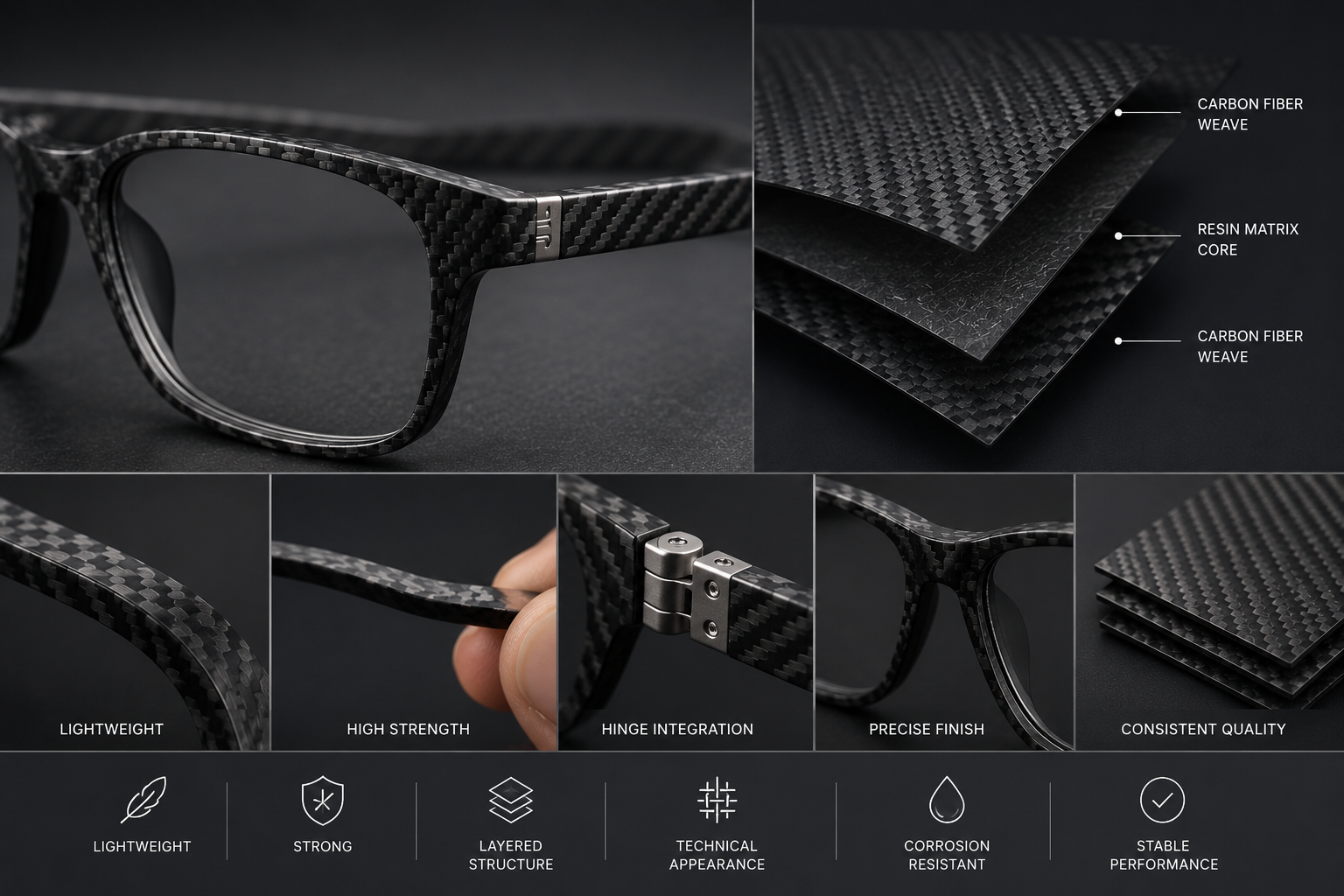
Carbon Fiber Eyewear Depends on Material Construction
“Carbon fiber” describes a material direction, but finished eyewear can use different material constructions, thicknesses and component combinations.
Layer orientation, component geometry, edge treatment and connection methods all influence the appearance and behavior of the finished frame.
- Carbon-fiber weave structure
- Layered composite construction
- Component thickness
- Edge treatment
- Hinge integration
- Surface finishing
Carbon Fiber Should Match the Intended Frame Design
Carbon fiber should not be selected only because of its woven appearance. The material construction also needs to suit the intended frame geometry, thickness and component design.
Sampling is particularly important for projects using mixed materials or unusual frame structures.
- Optical frames
- Sunglasses
- Carbon-fiber temples
- Combination frames
- Technical eyewear collections
- Private label products
Carbon Fiber Frame Profile
Carbon Fiber vs Acetate Eyewear
Carbon fiber and acetate offer different material identities and different development routes.
| Area | Carbon Fiber | Acetate |
|---|---|---|
| Visual Direction | Technical, engineered, woven or layered appearance. | Color-rich, patterned, transparent and fashion-led. |
| Frame Development | Depends on material form, component structure and connection method. | Sheet preparation, CNC machining and polishing. |
| Material Identity | Distinctive carbon weave or technical surface character. | Strong color, pattern and polished material depth. |
| Collection Positioning | Technical, modern and performance-inspired collections. | Fashion, lifestyle and premium design collections. |
| Combination Potential | Can be evaluated with metal or compatible frame components. | Frequently combined with metal hardware and components. |
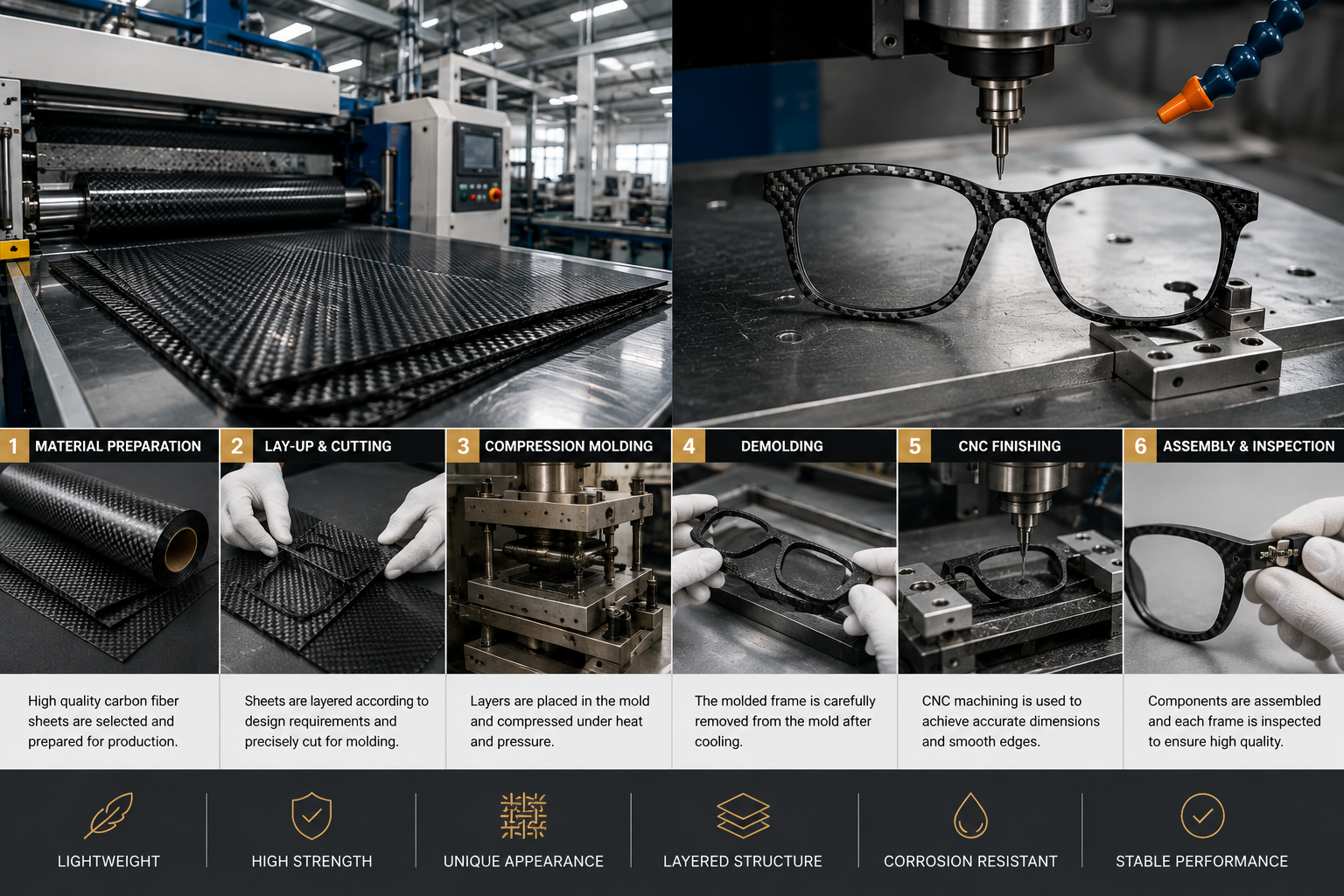
From Carbon Fiber Material to Finished Eyewear
The production route depends on the selected carbon-fiber material form, layer construction, frame geometry and component design.
Material preparation, lay-up, molding, machining, assembly and inspection need to be controlled as one process.
- Material preparation
- Layering and cutting
- Molding or forming
- Demolding and component preparation
- CNC finishing
- Assembly and inspection
Carbon Fiber Frame Development
Material construction, component geometry, finishing and assembly should be reviewed together.
Material Review
Confirm material form, appearance and required structure.
Component Development
Review frame front, temples and connection geometry.
Sample Production
Evaluate dimensions, surfaces, connections and finishing.
Assembly & QC
Inspect alignment, edges, hinges and final frame condition.
Where Can Carbon Fiber Be Used in Eyewear?
The appropriate use depends on component structure, material form and design feasibility.
Optical Frames
Selected carbon-fiber constructions can support technical optical frame concepts.
Sunglasses
Suitable for modern sunglass collections with a distinctive technical identity.
Carbon Fiber Temples
Carbon-fiber elements can be considered for temple-focused combination designs.
Mixed-Material Frames
Carbon fiber can be paired with compatible metal or other frame components.
What Should Be Confirmed Before Sampling?
Carbon fiber eyewear development should begin with clear material, component and structure requirements.
Material Form
Confirm the carbon-fiber material proposed for the actual frame components.
Frame Geometry
Review lens shape, frame-front geometry and temple structure.
Component Thickness
Thickness and edge design should suit the material structure.
Connection Method
Hinges and mixed-material joints should be reviewed for feasibility.
Surface Appearance
Confirm visible weave, texture and finish direction.
Branding
Logo and private label requirements should be included during development.
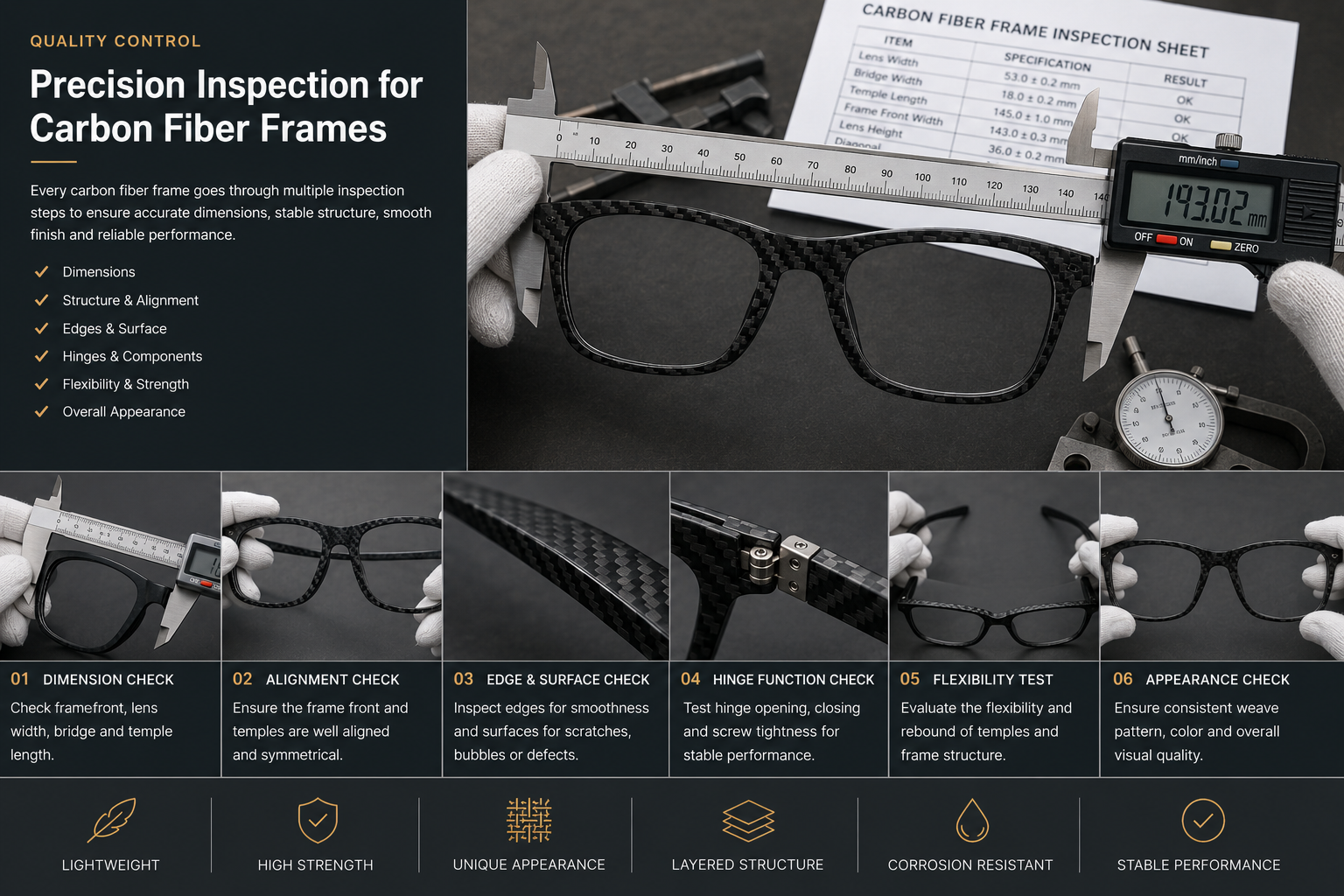
Carbon Fiber Frames Need Structural and Cosmetic Inspection
A technical material appearance does not replace basic eyewear quality control. Dimensions, alignment, hinge function, edges and visible surfaces still need inspection.
Finished frames should be checked against the approved sample and project specifications.
- Frame-front dimensions
- Lens and bridge dimensions
- Temple length
- Frame alignment
- Edge and surface condition
- Hinge and component function
- Flexibility or structural review
- Overall appearance
Develop Custom Carbon Fiber Eyewear for Your Brand
Projects can begin from a drawing, reference frame, material direction or existing product concept.
Material structure, frame geometry, branding and packaging can then be reviewed before sample development.
- Custom optical frames
- Custom sunglasses
- Carbon fiber temple concepts
- Mixed-material frames
- Sample development
- Logo customization
- Private label packaging
Send Us Your Carbon Fiber Project Brief
Send your frame drawing, reference sample, material direction, target quantity, branding and packaging requirements.
Discuss Your Carbon Fiber ProjectRelated Materials & Eyewear Development
Compare carbon fiber with other frame materials and explore related manufacturing and OEM development pages.
Carbon Fiber Eyewear FAQ
What is carbon fiber eyewear?
Carbon fiber eyewear generally refers to frames or components using carbon-fiber-based or composite materials. Exact construction depends on the product design.
Can carbon fiber be used for optical frames?
Suitable carbon-fiber constructions can be evaluated for optical eyewear, subject to frame geometry and manufacturing feasibility.
Can carbon fiber be used for sunglasses?
Yes. Carbon-fiber components can be considered for selected sunglass designs depending on the intended frame structure.
Is every carbon fiber frame constructed the same way?
No. Material form, layer structure, component geometry and connection methods can vary.
Can carbon fiber be combined with metal?
Depending on frame design, carbon fiber can be evaluated together with compatible metal or other components.
What should we provide for a custom carbon fiber project?
Send your frame drawing or reference, preferred material direction, target quantity, branding requirements and packaging direction.
Planning a Custom Carbon Fiber Eyewear Collection?
Send us your frame design, reference product, material direction, target quantity and private label requirements. We can review the material structure and development route before sampling.
Discuss Carbon Fiber Eyewear