Stainless Steel for Thin & Refined Custom Eyewear Frames
Stainless steel can support custom optical frames and sunglasses requiring thin metal profiles, controlled geometry and a clean, refined visual direction.
Frame quality depends on more than material choice. Component preparation, joining, alignment and surface finishing should be evaluated together during development.
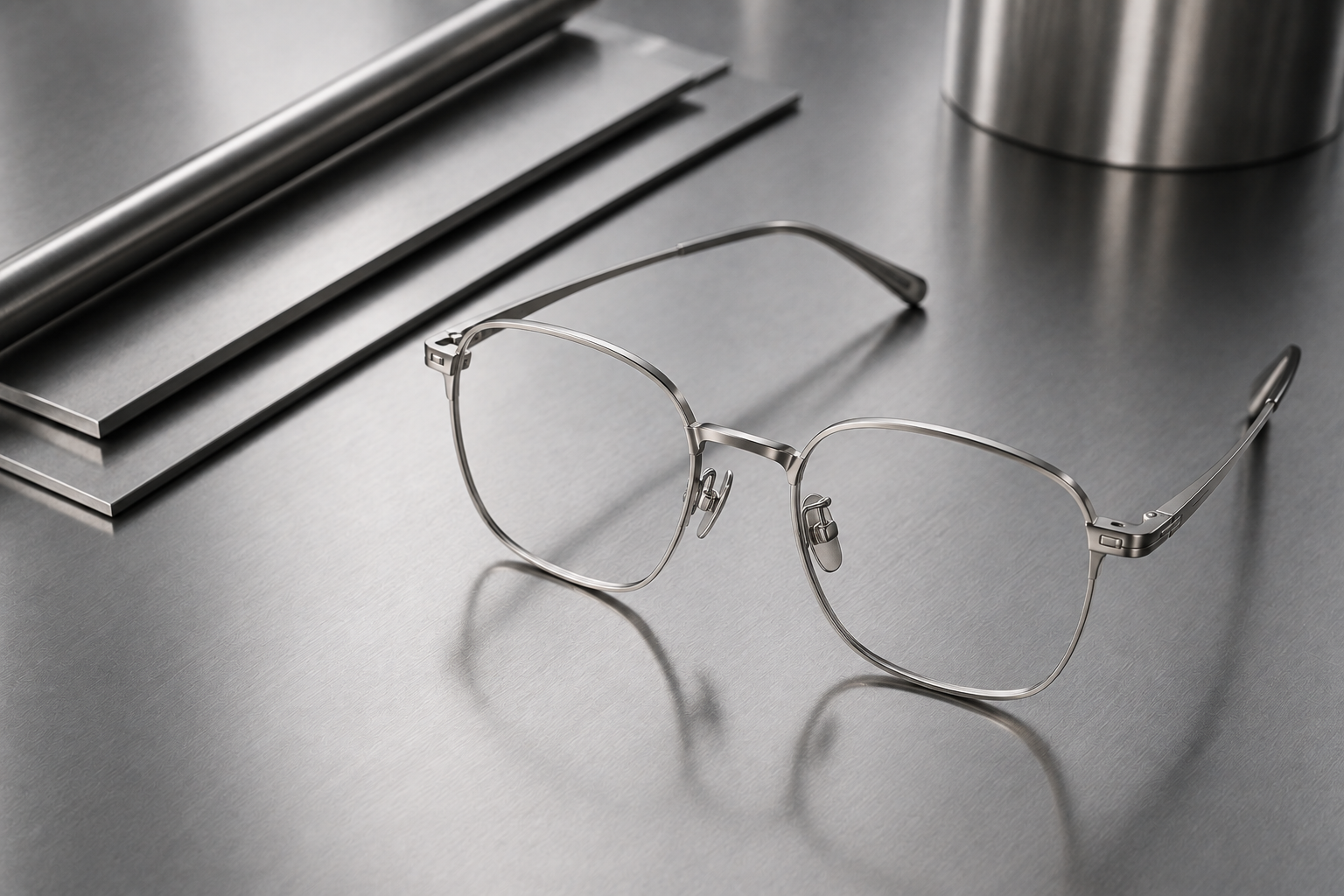
Why Use Stainless Steel for Eyewear Frames?
Stainless steel can be considered for metal eyewear collections where thin construction, visual refinement and controlled finishing are important.
Thin Profiles
Stainless steel can support slim rims, bridges and temples for refined metal-frame designs.
Clean Structure
Metal construction can support precise geometric frame concepts with restrained visual weight.
Surface Finishing
Different finishing directions can be evaluated according to design and production requirements.
Collection Flexibility
Suitable for optical frames, sunglasses and mixed-material concepts depending on frame design.
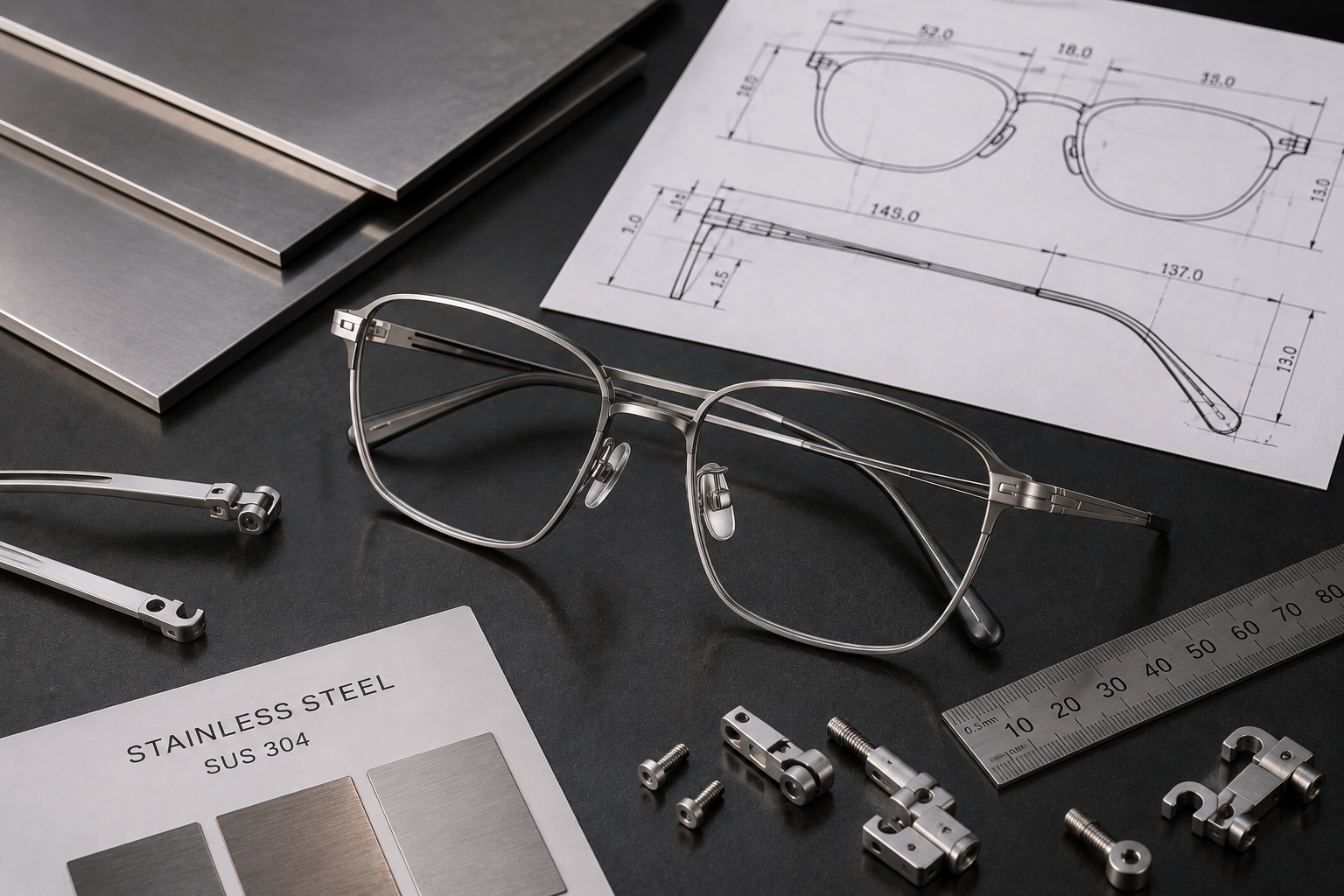
Precision Geometry for Thin Stainless Steel Frames
Thin stainless steel construction places greater importance on accurate component geometry, bridge dimensions, hinge positioning and temple design.
The material should therefore be evaluated together with the frame drawing and manufacturing route before sample production begins.
- Thin-rim optical frames
- Metal sunglasses
- Round and geometric lens shapes
- Fine bridge construction
- Thin metal temples
- Precision hinge positioning
Material Choice and Frame Structure Should Be Reviewed Together
Stainless steel should not be evaluated only as a material name. Component dimensions, frame geometry and the selected surface treatment all affect the finished eyewear.
For OEM and ODM projects, these details are best confirmed before sample development.
- Material specification
- Component thickness
- Frame dimensions
- Bridge and hinge structure
- Surface finish direction
- Manufacturing feasibility
Stainless Steel Frame Profile
Stainless Steel vs Titanium Eyewear
Both materials can support refined metal eyewear, but the best choice depends on frame structure, weight targets, sourcing and collection positioning.
| Area | Stainless Steel | Titanium |
|---|---|---|
| Design Direction | Thin metal, fashion, classic and geometric frames. | Lightweight, refined and minimalist metal frames. |
| Frame Weight | Depends on material thickness and overall component structure. | Commonly considered where lightweight construction is a priority. |
| Manufacturing | Metal processing, joining, alignment and finishing. | Precision component preparation, joining, alignment and finishing. |
| Surface Direction | Multiple visual finishing directions can be evaluated. | Finish depends on titanium specification and frame requirements. |
| Positioning | Fashion, commercial, contemporary and classic metal eyewear. | Frequently used for lightweight and premium metal collections. |
From Metal Components to Finished Eyewear
Thin metal eyewear requires component accuracy, joining, alignment and finishing to work together throughout production.
Design Review
Review frame dimensions, geometry and structural feasibility.
Component Preparation
Prepare rims, bridge, temples and connection components.
Joining & Alignment
Connect components while controlling positioning and overall frame geometry.
Finish & QC
Review dimensions, alignment, surface finish and assembled frame condition.
Surface Finish Changes the Character of a Metal Frame
Stainless steel frames can support different visual directions depending on the selected surface treatment and color concept.
Final finishing should be confirmed against the actual component structure, target appearance and manufacturing process.
- Polished finish direction
- Brushed metal direction
- Matte surface direction
- Black metal finish
- Gold-tone finish
- Bronze-tone finish
- Rose-gold-tone finish
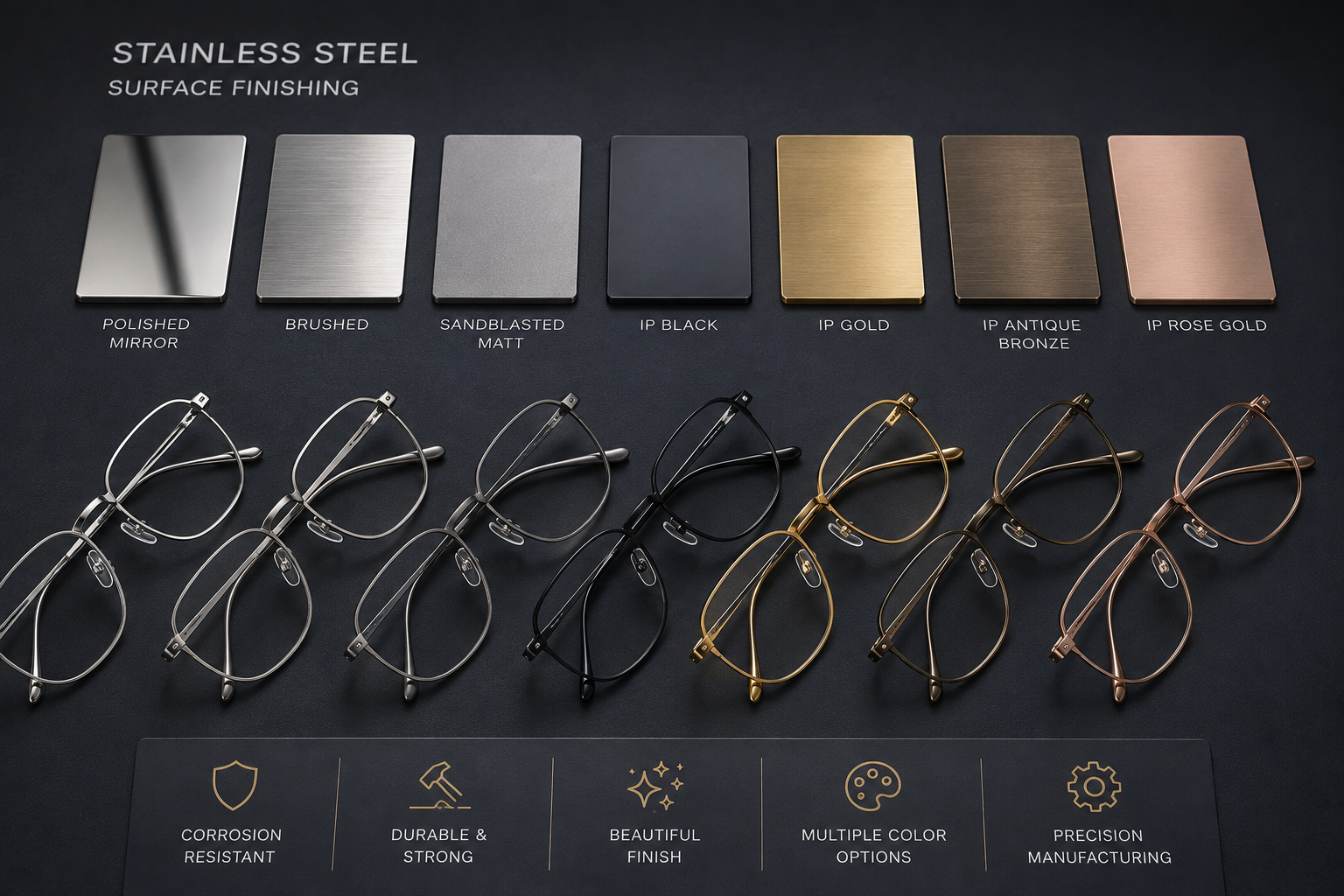
Different Finishes for Different Collection Styles
Availability and process selection should be confirmed according to the actual frame design and project requirements.
Polished Finish
A brighter reflective direction for clean and refined eyewear.
Brushed Direction
A more restrained metal texture for contemporary or technical designs.
Matte Direction
A low-gloss appearance suitable for understated frame concepts.
Colored Finishing
Black, gold, bronze and other color directions can be reviewed by project.
What Should Be Confirmed Before Sampling?
Stainless steel frame development should begin with clear structure, finish and product-positioning requirements.
Frame Geometry
Confirm lens shape, rim profile, bridge design and overall dimensions.
Material Specification
Review material requirements against frame structure and manufacturing route.
Component Structure
Review temples, hinges, bridge components and connection details.
Joining
Connection methods should suit the selected component geometry.
Surface Finish
Confirm color, texture and visual direction before sample approval.
Branding
Logo placement and private label details should be incorporated during development.
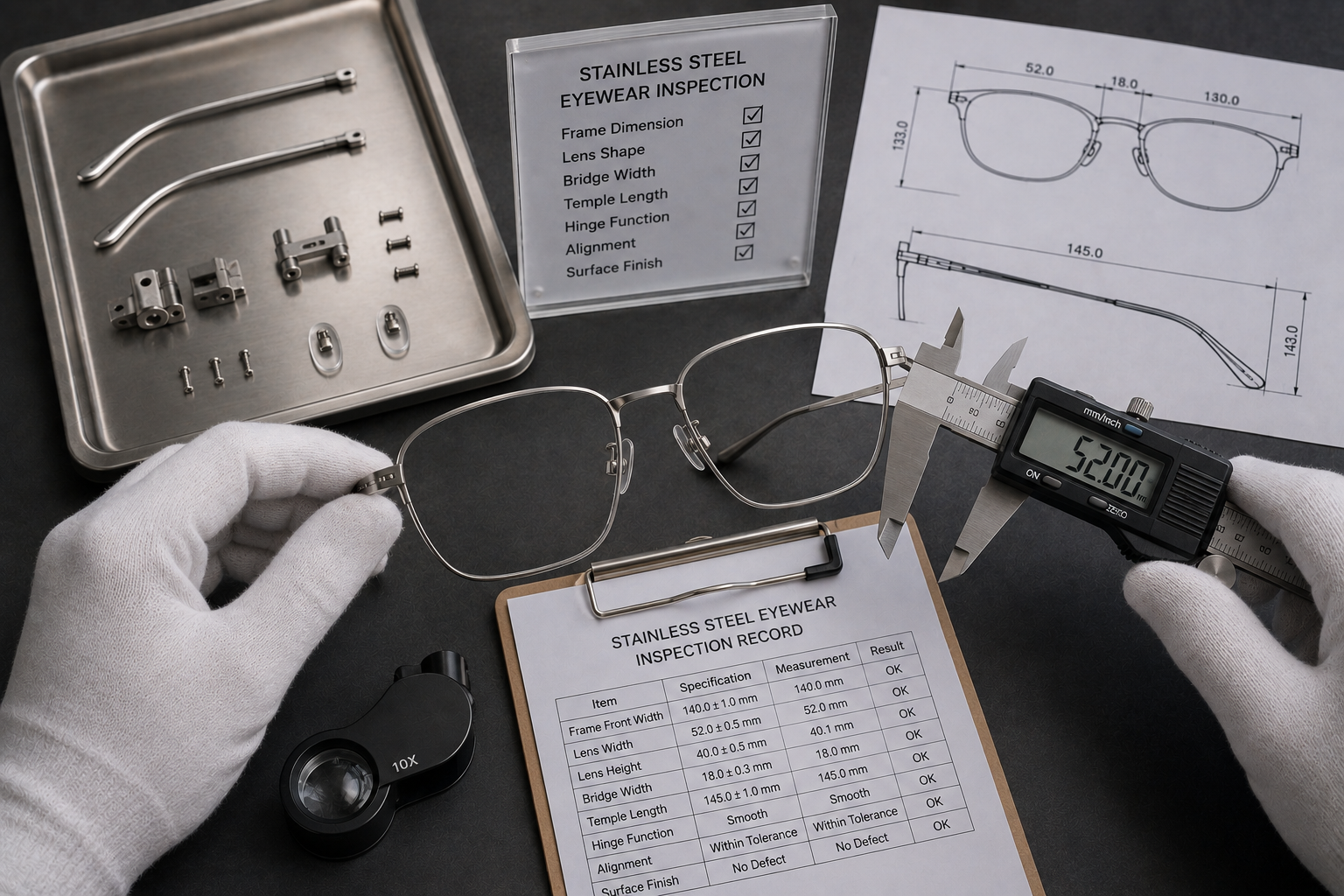
Thin Metal Frames Require Accurate Inspection
Stainless steel frames can appear visually simple, but thin metal construction makes dimensional accuracy and alignment important.
Inspection should review both measurable frame dimensions and the functional condition of the assembled eyewear.
- Frame front width
- Lens width and height
- Bridge width
- Temple length
- Hinge function
- Frame alignment
- Surface condition
Develop Custom Stainless Steel Eyewear for Your Brand
Projects can begin from a drawing, reference frame, CAD file or existing product concept.
Frame geometry, material, finish, branding and packaging can then be reviewed together before sample development.
- Custom optical frame development
- Custom metal sunglasses
- Frame structure review
- Surface finishing direction
- Sample development
- Logo customization
- Private label packaging
Send Us Your Stainless Steel Frame Project
Send your frame drawing, reference sample, target quantity, preferred finish, branding and packaging requirements.
Discuss Your ProjectRelated Materials & Eyewear Development
Explore related pages to compare stainless steel with other frame materials and manufacturing routes.
Stainless Steel Eyewear FAQ
Is stainless steel suitable for optical frames?
Yes. Stainless steel can be evaluated for thin metal optical frames, depending on component structure and manufacturing feasibility.
Can stainless steel be used for sunglasses?
Yes. Stainless steel can also support metal sunglass frames where the frame and lens structure suit the intended product.
Is stainless steel lighter than titanium?
Final frame weight depends on material density, component dimensions and overall geometry. Titanium is commonly selected where lightweight construction is a priority.
Can stainless steel eyewear have different finishes?
Yes. Different finish directions can be evaluated according to the selected frame design and production process.
Can stainless steel be combined with acetate?
Depending on frame structure, stainless steel components may be combined with acetate or other materials in mixed-material eyewear designs.
What should we provide before sample development?
Send your frame drawing or reference, target quantity, preferred material and finish, logo requirements and packaging direction.
Planning a Custom Stainless Steel Eyewear Collection?
Send us your frame design, reference sample, finish direction, target quantity and private label requirements. We can review the frame structure and manufacturing route before sampling.
Discuss Stainless Steel Eyewear