Eco-Conscious Material Options for Custom Eyewear
Eyewear brands increasingly evaluate materials not only for appearance and manufacturing performance, but also for material origin, recycled content, biobased content and packaging choices.
The environmental profile of a material depends on the selected supplier, grade and supporting documentation, so material claims should be verified before use in product communication.

What Makes an Eyewear Material an Eco-Conscious Option?
There is no single material that automatically makes an eyewear collection sustainable. The relevant factors depend on sourcing, composition, production, packaging and documented claims.
Biobased Content
Some eyewear materials may contain renewable or biobased feedstocks, depending on the selected supplier and grade.
Recycled Content
Recycled-content materials can be considered where percentage and material source are supported by documentation.
Material Traceability
Supplier, grade, origin and relevant declarations help support accurate material communication.
Packaging Direction
Packaging materials and pack-out design can also be reviewed as part of the overall project.
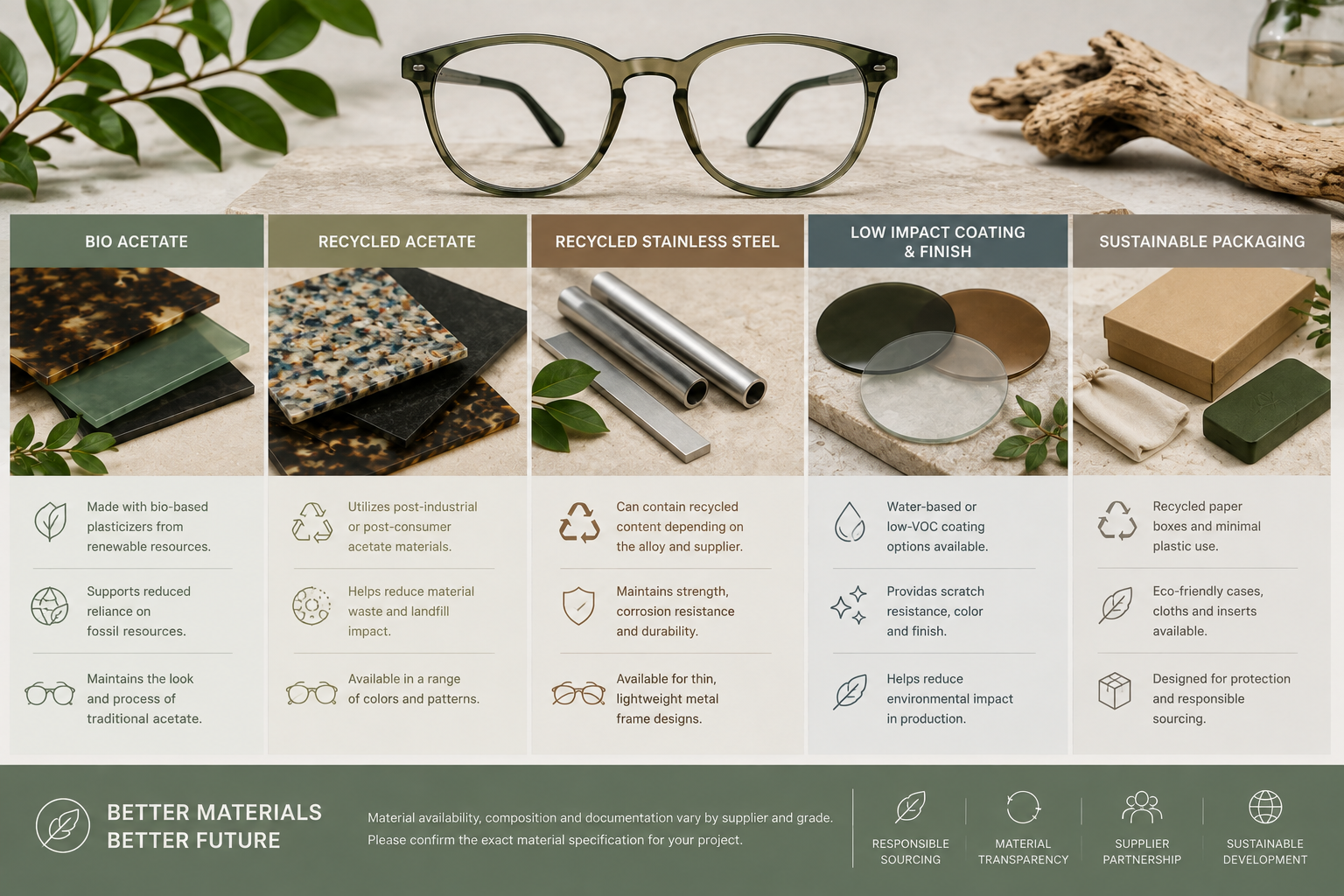
Eco Material Directions for Eyewear Development
Eco-conscious eyewear development can involve different material strategies rather than relying on a single material category.
Bio acetate, recycled-content materials, metal sourcing, coating choices and packaging can all be reviewed according to project objectives.
- Bio acetate
- Recycled acetate
- Recycled-content metal
- Alternative coating and finish directions
- Reduced-plastic packaging
- Recycled paper packaging
Material Paths for Eco-Conscious Eyewear Collections
Availability, composition and supporting documentation vary by supplier and material grade.
Bio Acetate
Acetate-based material grades with biobased, recycled or alternative material profiles can be evaluated.
Explore Bio Acetate →Recycled Acetate
Selected acetate materials may incorporate recycled content. Exact percentages should be verified by grade.
Discuss Material Availability →Recycled Metal Options
Recycled-content metal sourcing can be evaluated where suitable grades and supplier documentation are available.
Explore Stainless Steel →Lightweight Materials
Material efficiency can also be considered through lightweight frame design where suitable for the intended product.
Explore TR90 →Composite Materials
Technical composite materials can support selected lightweight and specialized frame concepts.
Explore Carbon Fiber →Reduced & Recycled Packaging
Packaging can be reviewed for recycled paper, lower plastic use and more efficient pack-out design.
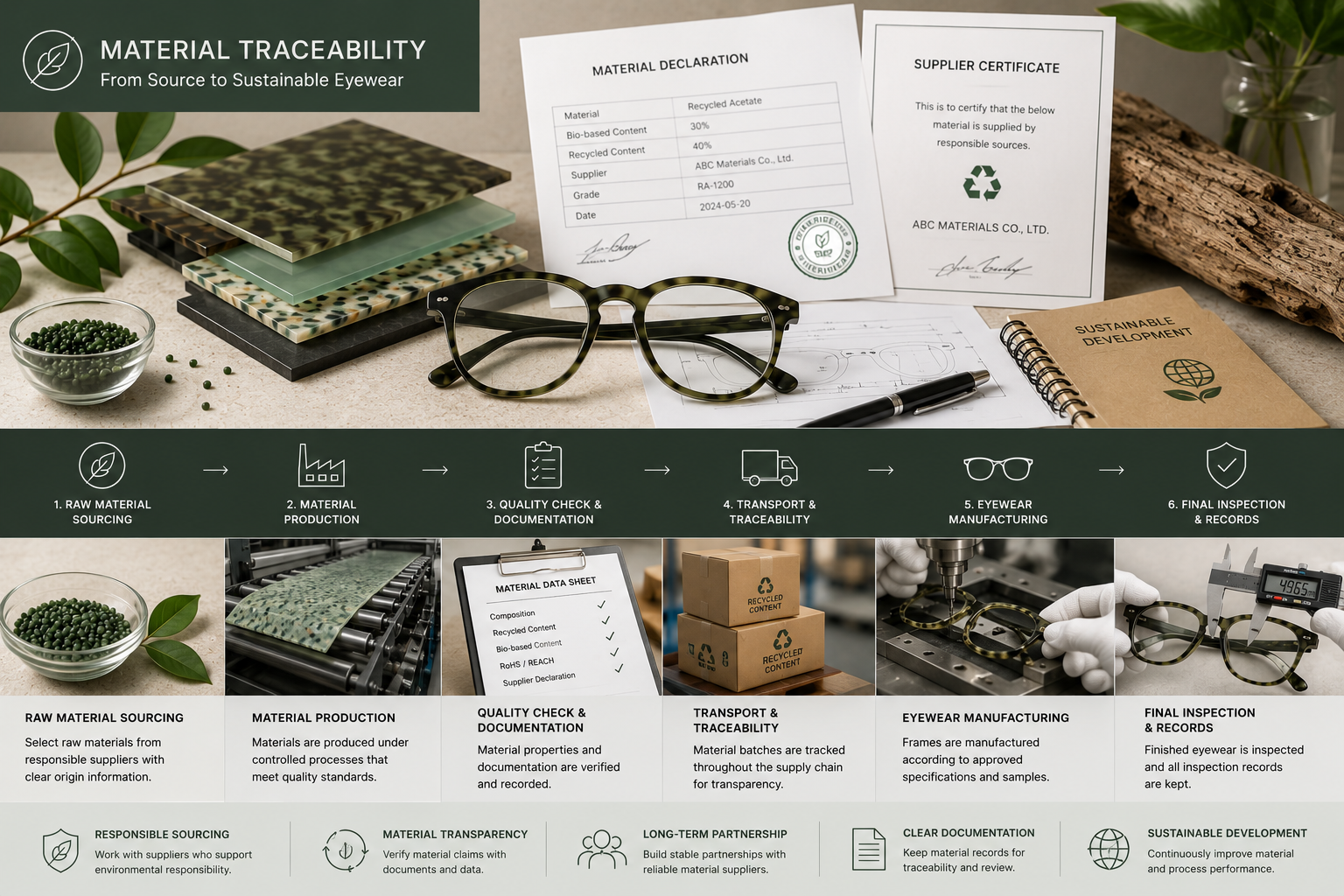
Discuss Packaging →Trace Material Requirements from Supplier to Finished Eyewear
Sustainability-related material claims become more useful when they are connected to a specific supplier, grade and production project.
Material records can help connect sourcing, manufacturing, inspection and finished-product communication.
- Material supplier identification
- Material grade and specification
- Supplier declarations where available
- Batch or project records
- Production material confirmation
- Finished-frame inspection
Define the Material Attribute Before Making the Claim
Broad terms such as “eco,” “green” or “sustainable” do not describe a material specification on their own.
A stronger sourcing approach is to define the exact attribute required by the project and then verify that attribute.
- Biobased content where applicable
- Recycled content where applicable
- Material supplier
- Specific material grade
- Material origin where relevant
- Supporting documents where available
Better Material Claim Structure
Compare Eco-Conscious Eyewear Material Directions
The right option depends on frame design, sourcing objectives and supporting documentation.
| Material Direction | Possible Project Focus | What to Verify |
|---|---|---|
| Bio Acetate | Acetate frame aesthetics with an alternative material profile. | Supplier, grade, composition and supporting documentation. |
| Recycled Acetate | Familiar acetate appearance with recycled-content sourcing. | Recycled percentage, grade and availability. |
| Recycled Metal | Metal eyewear with recycled-content sourcing requirements. | Alloy, supplier and recycled-content documentation. |
| Lightweight Materials | Lower frame mass through material and structural choices. | Performance, manufacturing compatibility and intended application. |
| Packaging | Reduced material use, recycled paper and lower-plastic packaging. | Material composition, printing and protection requirements. |
From Material Requirement to Finished Eyewear
Eco-conscious sourcing works best when material requirements are included from the beginning of product development.
Define Requirement
Identify whether the project requires biobased, recycled, traceable or packaging-related attributes.
Review Materials
Evaluate available grades against frame design and manufacturing requirements.
Verify Documents
Review supplier data and relevant material records before approving claims.
Sample & Produce
Validate the selected material through samples before bulk production.
What Should an Eyewear Brand Verify?
Clear material specifications reduce the risk of vague or unsupported claims.
Material Supplier
Confirm the actual supplier proposed for production.
Material Grade
Record the specific grade rather than relying only on a general material name.
Recycled Content
Verify whether recycled content exists and what percentage applies.
Biobased Content
Where relevant, verify the documented biobased attribute.
Supporting Documents
Review available supplier declarations, certificates or material data.
Production Consistency
Confirm the approved material can remain consistent between sample and bulk production.

Eco-Conscious Material Strategy Can Extend Beyond the Frame
Private label eyewear projects can also review packaging materials, box size, protective components and plastic use.
Packaging should still protect the finished eyewear during transport, so material reduction needs to be balanced with practical protection.
- Recycled-paper boxes
- Paper-based inserts
- Reusable eyewear cases
- Fabric pouches
- Reduced unnecessary plastic
- Compact pack-out design
Review Packaging Together with the Eyewear Collection
Material, protection, branding and logistics should be considered together.
Recycled Paper
Paper packaging can be reviewed according to protection and printing requirements.
Reduced Plastic
Unnecessary plastic parts can be reviewed where the packaging allows.
Compact Pack-Out
Packaging size can be evaluated to reduce excess space and material use.
Private Label Design
Branding and material statements should match verified project specifications.
Develop an Eco-Conscious Eyewear Collection Around Your Requirements
Projects can begin from an existing design, reference frame, drawing or material sourcing objective.
Material selection, frame development, documentation, branding and packaging can then be reviewed together.
- Bio acetate frame development
- Recycled-content sourcing review
- Alternative material evaluation
- Material documentation requirements
- Custom optical frames and sunglasses
- Logo and private label development
- Packaging direction
Send Us Your Material Requirement
Tell us which material attributes matter to your collection, such as biobased content, recycled content, material traceability, packaging or other sourcing requirements.
Discuss Your Eco Material ProjectRelated Materials & Eyewear Development
Explore individual material pages and related OEM development options.
Eco Materials for Eyewear FAQ
What are eco materials for eyewear?
The term can include eyewear materials selected for attributes such as biobased content, recycled content, traceable sourcing or other documented characteristics.
Is bio acetate the same as recycled acetate?
Not necessarily. Biobased content and recycled content describe different material attributes. Exact composition depends on the selected supplier and grade.
Is every material described as eco-friendly certified?
No. Certification and supporting documentation vary by supplier and material grade. Material claims should be checked against actual documentation.
Can recycled materials be used for custom eyewear?
Selected recycled-content materials can be evaluated for custom eyewear where they are available and compatible with the intended process.
Can packaging also follow an eco-conscious direction?
Yes. Packaging can be reviewed for paper composition, reduced plastic, pack-out efficiency and private label requirements.
What should we provide for an eco-material eyewear project?
Send your frame design or reference, target quantity, required material attributes, documentation requirements, branding and packaging direction.
Planning an Eco-Conscious Eyewear Collection?
Send us your frame concept, material requirements, target quantity, documentation needs and private label direction. We can review suitable material options before sample development.
Discuss Eco Material Eyewear