Custom Materials for OEM & ODM Eyewear Development
Some eyewear projects begin with a frame design. Others begin with a material requirement. Your project may specify a particular acetate supplier, metal grade, color, surface finish, composite structure or material combination.
Deepward can review material requirements together with frame geometry, manufacturing feasibility, sampling and final product development.

When Does an Eyewear Project Need Custom Material Development?
Custom material development is useful when a standard material option does not fully match the product concept, brand positioning or technical requirements.
Specified Supplier
The project may require a particular acetate, metal or component supplier already approved by the brand.
Custom Color
A collection may require a particular color, transparency, pattern or visual reference.
Special Finish
Surface texture, metal finish, polishing level or coating direction may be part of the specification.
Material Combination
Some frames combine acetate, metal, carbon fiber or other compatible components.
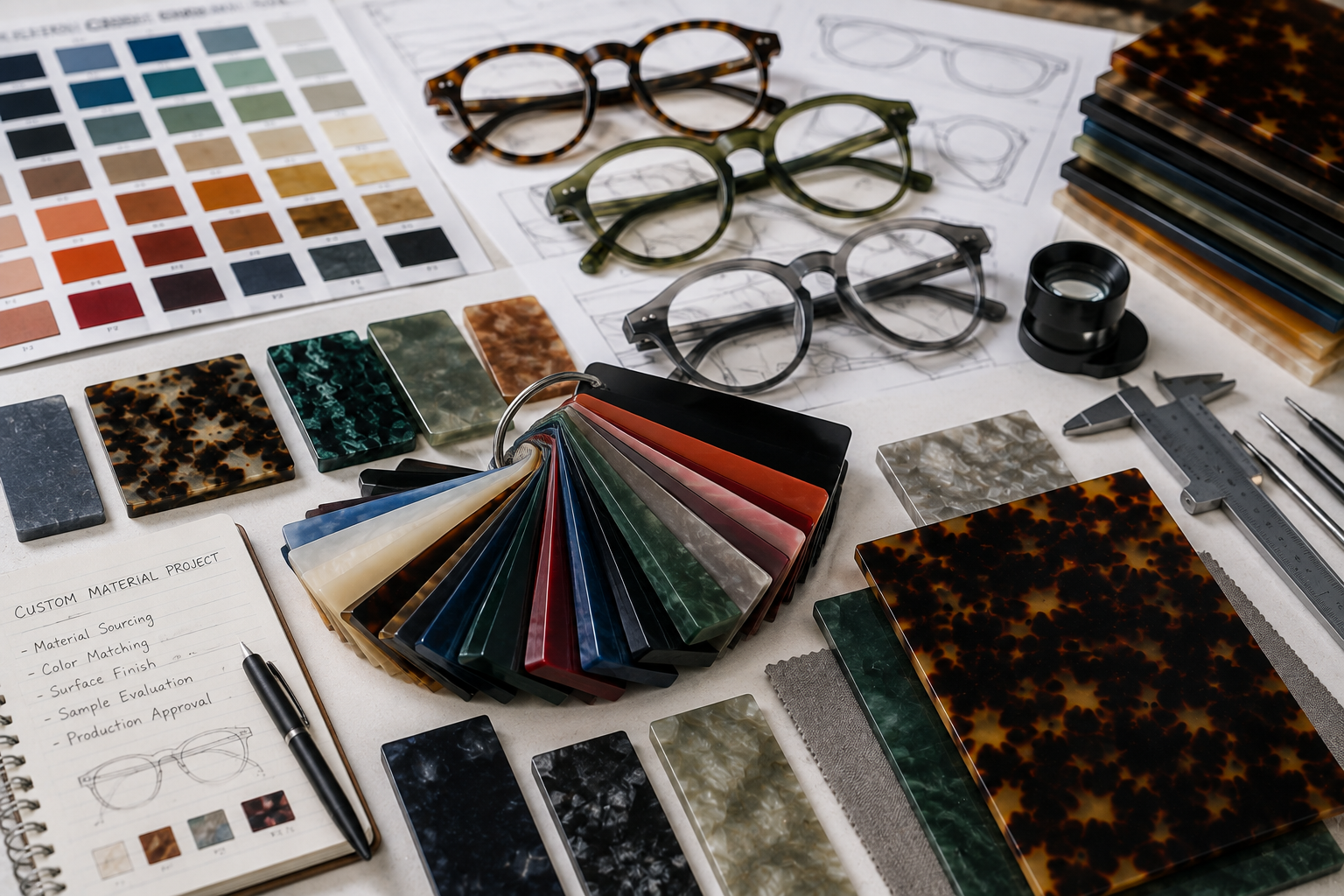
Start from a Material Code, Physical Sample or Visual Reference
Not every project begins with an exact supplier material code. A customer may instead provide an existing frame, material sample, brand color or visual reference.
The reference can then be translated into a practical sourcing and sample-development direction.
- Existing eyewear sample
- Acetate color reference
- Brand color palette
- Material supplier code
- Pattern and transparency direction
- Surface finish reference
Different Ways to Start a Custom Material Project
You do not always need to know the exact material specification before contacting the factory. The starting point can vary by project.
Use a Named Material Supplier
Provide the supplier, material family, reference or color code already selected for your collection.
Match an Existing Material Direction
Send a physical sample, reference frame or material image to communicate the intended appearance.
Custom Color or Pattern Direction
Projects can begin from brand colors, fashion references or existing collection palettes.
Specific Material Performance
The project may require a lightweight, hard, flexible or specialized material direction.
Mixed-Material Eyewear
Review how acetate, metal, titanium, carbon fiber or other components can work together in one frame.
Customer-Supplied Material Review
If you already source your own material, its dimensions, form and manufacturing compatibility can be evaluated before sampling.
Material Customization Is More Than Choosing a Material Name
The final appearance and manufacturability of an eyewear frame depend on a combination of material attributes and frame engineering.
These details should be reviewed together before production material is fully approved.
- Material supplier or family
- Color and pattern direction
- Transparency or opacity
- Material thickness
- Surface texture
- Polishing level
- Metal color or finish
- Component combinations
- Visible material orientation
Custom Material Project Profile
Combine Materials According to Structure, Not Only Appearance
Mixed-material eyewear can combine different material characteristics within one frame, but the connection between components needs to be considered during engineering.
Acetate, titanium, stainless steel, carbon fiber and other compatible components can serve different functions within the same design.
- Acetate front + metal temples
- Metal front + acetate temples
- Titanium + acetate components
- Metal + carbon fiber temples
- Combination rim structures
- Custom hinge and connection details

The Same Material Can Behave Differently in Different Frame Designs
Material selection should always be evaluated against the geometry and construction of the actual eyewear frame.
| Design Area | Material Consideration | Why It Matters |
|---|---|---|
| Frame Front | Material thickness, rigidity, machining or molding requirements. | Influences lens geometry, rim profile and overall frame structure. |
| Bridge | Material behavior and bridge dimensions. | Affects structural design and frame fit. |
| Temples | Material thickness, flexibility and component integration. | Influences comfort, appearance and hinge connection. |
| Hinges | Connection design and material compatibility. | Important for stable assembly and repeated opening and closing. |
| Surface | Polish, texture, coating or visible material character. | Determines much of the finished product appearance. |
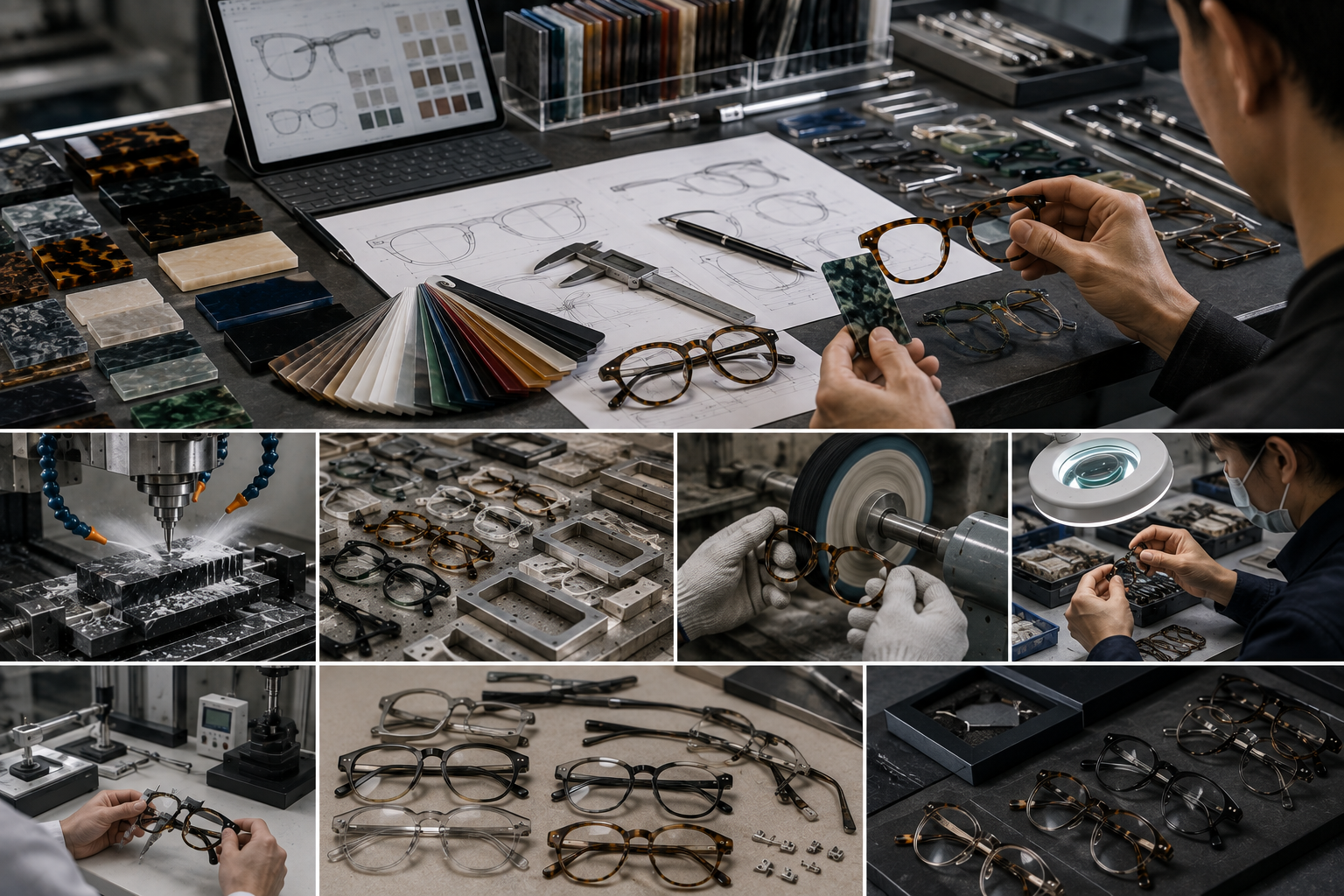
From Material Selection to an Approved Eyewear Sample
A material reference becomes useful only when it can be translated into an actual manufacturable eyewear product.
Material selection, frame engineering, machining, finishing, assembly and inspection should therefore be reviewed as one development route.
- Material sourcing and selection
- Frame design review
- Technical drawing confirmation
- CNC machining or applicable processing
- Surface finishing and polishing
- Assembly
- Dimensional inspection
- Sample approval
From Material Requirement to Approved Production Specification
A clear development process helps confirm whether the requested material can work with the intended frame design.
Send the Requirement
Provide your design, sample, supplier reference or material direction.
Review Feasibility
Evaluate material form, dimensions, frame structure and manufacturing route.
Develop the Sample
Test the material within the actual frame design and finishing requirements.
Approve for Production
Confirm the approved material, appearance and product specification before bulk production.
Already Have Your Own Material Supplier?
Some eyewear brands already work with their own acetate, metal or component supplier. In that situation, the project can begin by reviewing the supplied material against the intended frame design.
Compatibility should be confirmed before production rather than assuming that every material can be processed with the same manufacturing route.
- Supplier information
- Material reference or grade
- Available dimensions
- Material thickness
- Sample material where possible
- Required frame design
- Production quantity
What We Need to Review
Keep Material Requirements Connected to the Production Project
When a project specifies a supplier, material family, grade or special characteristic, those details should remain connected to the relevant sample and production specification.
Supplier Reference
Record the supplier or source when it is part of the customer's material requirement.
Material Code
Use the actual color, grade or material reference where one has been specified.
Approved Sample
Use the approved eyewear sample as an important reference for appearance and structure.
Production Material
Confirm that the material used for production matches the approved project direction.
Appearance
Review color, pattern, surface and visible material character.
Change Control
If material supplier, grade or specification changes, the impact should be reviewed before continuing production.
Build the Material Specification Around Your Eyewear Collection
Custom material projects can begin from a fully specified material or simply from a visual, technical or brand requirement.
The material direction can then be developed together with frame geometry, finishing, branding and packaging.
- Custom optical frames
- Custom sunglasses
- Specified acetate suppliers
- Custom color directions
- Mixed-material eyewear
- Special surface finishing
- Customer-supplied materials
- Private label packaging
Send Us Your Material Brief
Send your material reference, frame drawing, sample, desired color, target quantity and any supplier, surface or performance requirements.
Discuss Custom MaterialsRelated Eyewear Material Options
Explore individual materials before deciding whether your project requires a standard or customized material route.
Custom Eyewear Materials FAQ
Can I specify my own material supplier?
Yes. If your project requires a particular supplier, send the supplier name, material reference and relevant requirements for feasibility review.
Can you match a material from an existing frame?
A reference frame or physical material sample can be used to communicate the intended appearance. Exact matching depends on material availability and the sourcing route.
Can custom acetate colors be developed?
Custom or special color directions can be reviewed, but feasibility depends on the material supplier, required quantity, reference and production route.
Can different materials be combined in one eyewear frame?
Yes, depending on the design. Acetate, metal, titanium, carbon fiber and other compatible components may be evaluated in mixed-material structures.
Can we supply our own material?
Customer-supplied material can be reviewed for dimensions, structure, manufacturing compatibility and sample feasibility before production.
What should we send before starting a custom material project?
Send your frame drawing or reference, material sample or code if available, target quantity, surface requirements, branding and supplier-specific requirements.
Have a Specific Material in Mind for Your Eyewear Collection?
Send us your material reference, sample, frame design, color direction or technical requirement. We can review the material together with the eyewear structure before sample development.
Discuss Your Custom Material Project