Precision CNC Machining for Custom Eyewear Manufacturing
Deepward uses precision CNC machining to support custom acetate eyewear, frame fronts, temples, lens grooves, bridge structures, hinge positions, and other detailed eyewear components. Accurate machining helps improve dimensional consistency, assembly precision, and repeatability throughout OEM and ODM eyewear production.
Start Your Project Custom Eyewear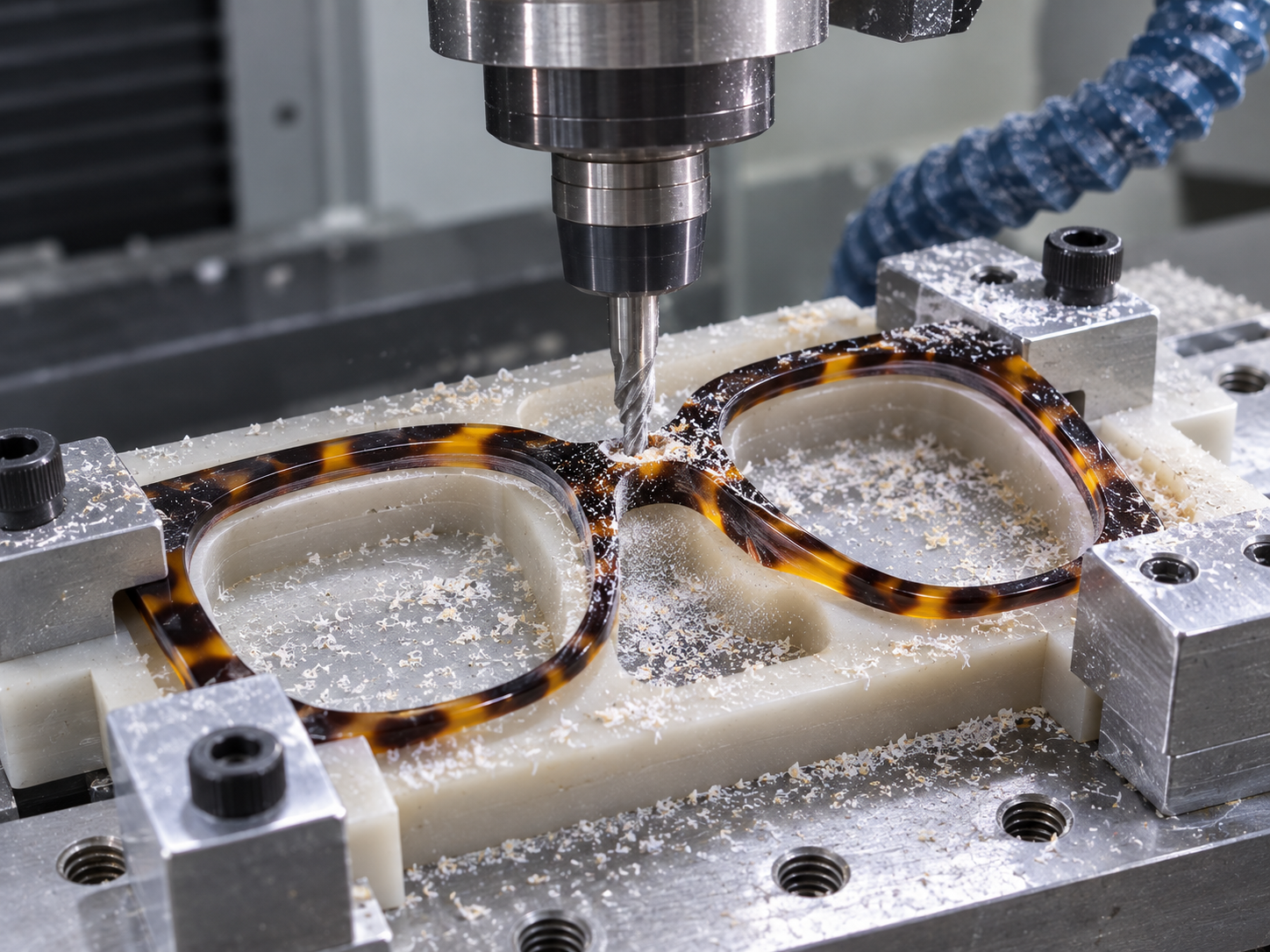
CNC Machining for Eyewear Components
Eyewear components require consistent geometry and precise dimensional control. CNC machining allows complex frame shapes and detailed structures to be produced with repeatable accuracy before polishing, assembly, and final finishing.
Accurate Frame Geometry
Controlled machining helps maintain consistent frame contours, lens openings, bridges, and other critical dimensions.
Repeatable Production
CNC programs help improve consistency between samples, production batches, and repeat orders.
Complex Design Support
Detailed frame shapes, grooves, recesses, holes and structural features can be machined according to approved designs.
Better Assembly Accuracy
Accurate machining supports better hinge positioning, lens fitting, component alignment, and final frame assembly.
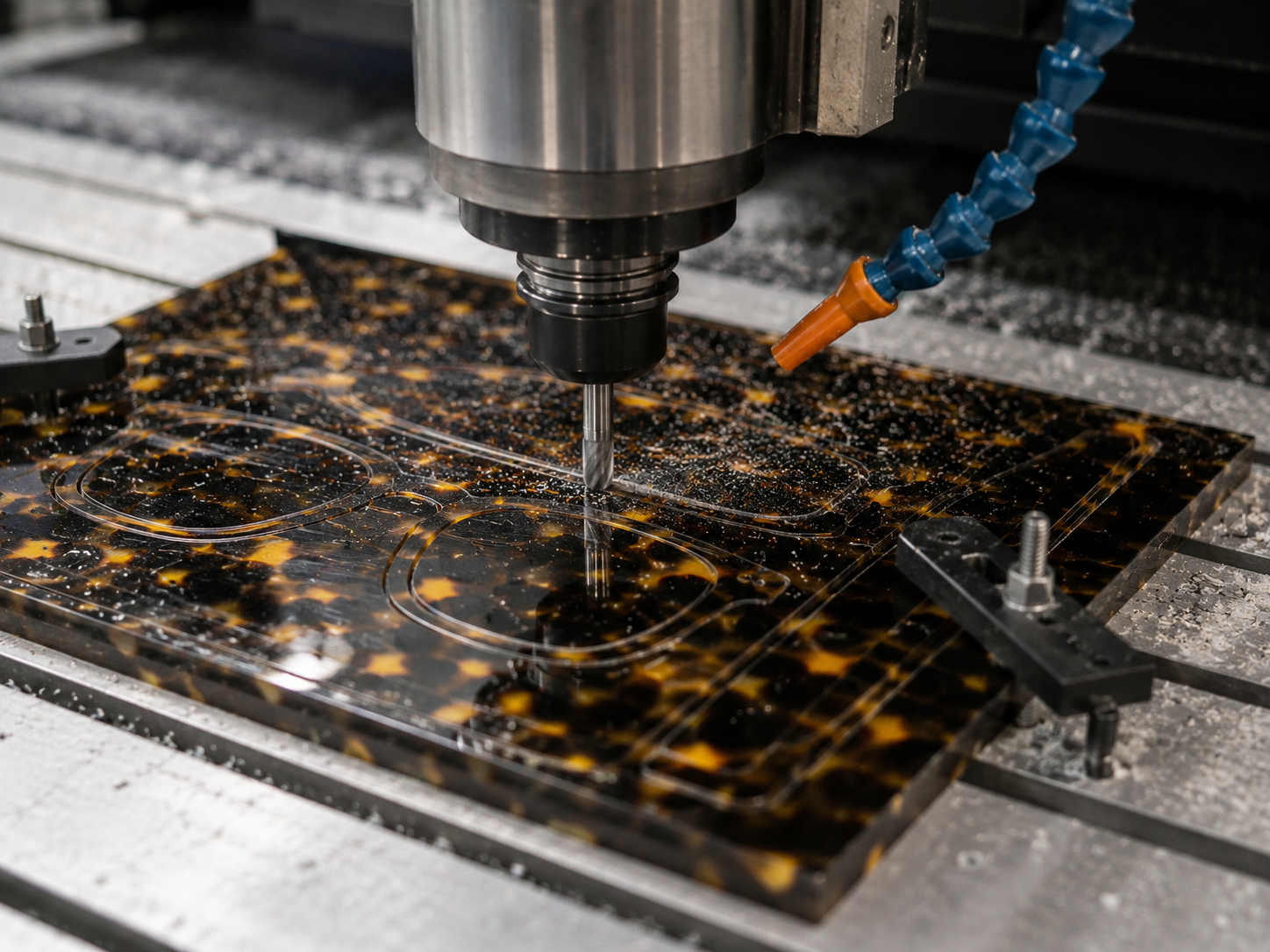
CNC Cutting of Acetate Sheets
Custom acetate eyewear begins with accurate material processing. CNC equipment can machine acetate sheets according to approved frame geometry, helping control the outer contour, eye shape, bridge structure, lens openings, and other critical features.
- Frame front contour machining
- Lens opening cutting
- Bridge geometry machining
- Custom frame shape development
- Accurate repeatability between frames
- Preparation for later polishing and finishing
Eyewear CNC Machining Process
The exact workflow depends on material and frame design, but the following stages represent the typical CNC machining process for custom eyewear production.
Design Review
Frame drawings, dimensions, material, component geometry, and machining requirements are reviewed before production.
CAD / CAM Preparation
Approved geometry is converted into machining data and suitable toolpaths for production.
Material Setup
Acetate sheets or frame components are positioned and secured for controlled machining.
Rough Machining
Initial cutting removes excess material and creates the basic frame or component geometry.
Precision Machining
Detailed contours, lens grooves, bridge areas, holes, recesses, and other structural features are machined.
Dimensional Inspection
Key dimensions and machining positions are checked before the components continue to later processes.
Edge Refinement
Machined components are prepared for polishing, hinge installation, core wire processing, and assembly.
Production Transfer
Approved parts move into polishing, assembly, branding, and final quality control.
Precision Machining of Acetate Frame Fronts
The frame front contains several dimensions that directly affect appearance, lens fitting, comfort, and later assembly. CNC machining helps control these features consistently across the production batch.
- Outer frame contours
- Lens openings
- Lens groove geometry
- Bridge shape and spacing
- Hinge installation areas
- Decorative recesses and details
Machined Acetate Frame Parts Ready for Finishing
After CNC machining, frame fronts, temples, hinge areas, and other components are inspected before moving into polishing, core wire installation, hinge fitting, assembly, and finishing.
- Machined acetate frame fronts
- Machined acetate temples
- Hinge preparation areas
- Core wire preparation
- Custom component geometry
- Parts prepared for polishing and assembly
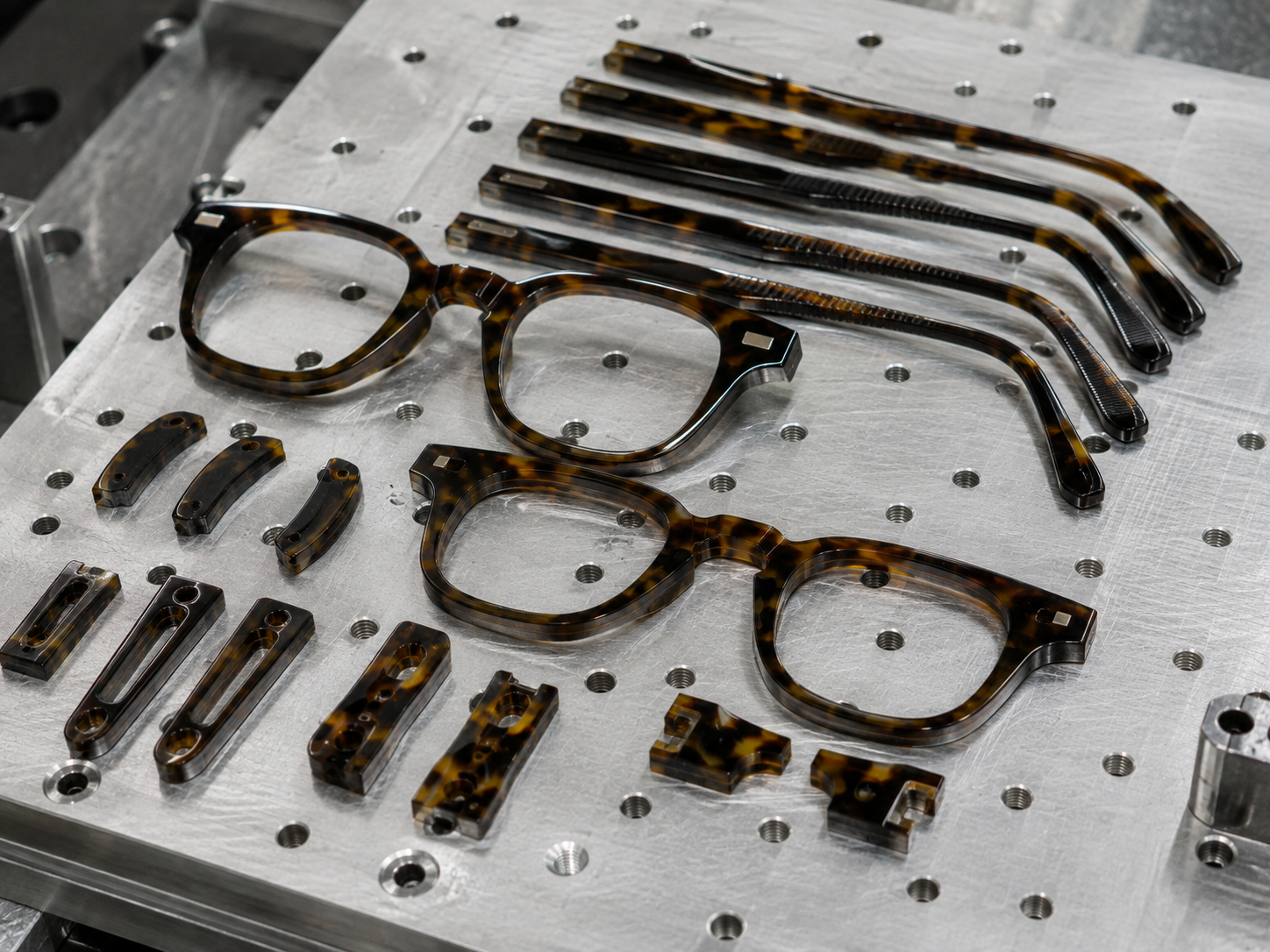
Eyewear Components We Can CNC Machine
CNC machining can support a variety of frame components depending on material, structure, and design requirements.
Acetate Frame Fronts
Custom frame contours, eye shapes, bridge structures, lens grooves, and decorative details.
Acetate Temples
Temple outlines, hinge areas, core wire structures, logo locations, and decorative machining.
Lens Grooves
Controlled groove machining for accurate lens fitting and stable frame assembly.
Bridge Areas
Detailed machining around bridge and nose areas according to frame geometry and fitting requirements.
Hinge Recesses
Accurate hinge positions and recesses to improve component placement and assembly consistency.
Custom Decorative Details
Selected grooves, inlays, recesses, logo areas, and structural details according to approved designs.
CNC Machining for Different Eyewear Materials
Machining methods vary according to material properties, component geometry, and final frame requirements.
Acetate
CNC cutting and shaping for frame fronts, temples, lens grooves, and detailed custom designs.
Metal Components
Selected small components and structural details can be processed according to project requirements.
Titanium Components
Precision processing can support selected titanium eyewear components and assembly details.
Prototype Components
CNC machining supports custom prototypes, engineering samples, and small-batch development.
Quality Control During CNC Machining
Machining accuracy directly affects lens fitting, hinge installation, frame symmetry, and final assembly quality.
| Inspection Stage | Key Checks |
|---|---|
| Material Check | Material condition, thickness, appearance, color, and suitability for the approved frame design. |
| Frame Contour Check | Overall frame shape, eye shape, bridge geometry, and outer contour consistency. |
| Lens Groove Check | Groove position, depth, continuity, and suitability for later lens fitting. |
| Hole & Recess Position | Hinge positions, screw holes, logo recesses, slots, and other machining details. |
| Dimensional Inspection | Key frame dimensions, bridge width, lens opening, temple geometry, and component spacing. |
| Surface & Edge Check | Machining marks, edge condition, burrs, visible defects, and readiness for polishing. |
CNC Machining Integrated into Complete Eyewear Manufacturing
CNC machining is one stage in a complete eyewear manufacturing process. Deepward connects precision machining with material preparation, polishing, core wire processing, welding, assembly, surface finishing, branding, and quality inspection.
- Support for custom frame drawings and samples
- Acetate frame front and temple machining
- Lens groove and hinge position machining
- Custom design and prototype development
- Integrated polishing and finishing processes
- OEM and ODM eyewear manufacturing support
- Final quality inspection before shipment
Need a Custom Frame Machined?
Send us your CAD drawings, design files, reference samples, material requirements, frame dimensions, target quantity, and finishing requirements. Our team can review the manufacturability of your eyewear design before sample development.
CNC Eyewear Machining FAQ
Can you CNC machine eyewear based on our own design?
Yes. We can review drawings, design files, samples, or reference products and evaluate machining and overall manufacturing feasibility.
What parts of acetate frames can be CNC machined?
Depending on the design, CNC machining can be used for frame fronts, temples, lens grooves, bridge areas, hinge recesses, holes, slots, and decorative details.
Why is CNC machining important for custom eyewear?
It helps improve dimensional consistency, complex shape accuracy, component positioning, lens fitting, and repeatability between production batches.
Can CNC machining be used for prototypes?
Yes. CNC machining is suitable for sample development, engineering verification, and custom prototype eyewear projects.
What happens after CNC machining?
Depending on the product, machined components may proceed to polishing, hinge installation, core wire processing, welding, assembly, surface finishing, logo customization, and final inspection.
Start Your Custom CNC Eyewear Project
Send us your drawings, CAD files, samples, material requirements, frame specifications, target quantity, and finishing needs. Deepward can help evaluate your design and develop a suitable manufacturing solution.
Request a Quote